Last updated November 25, 2026
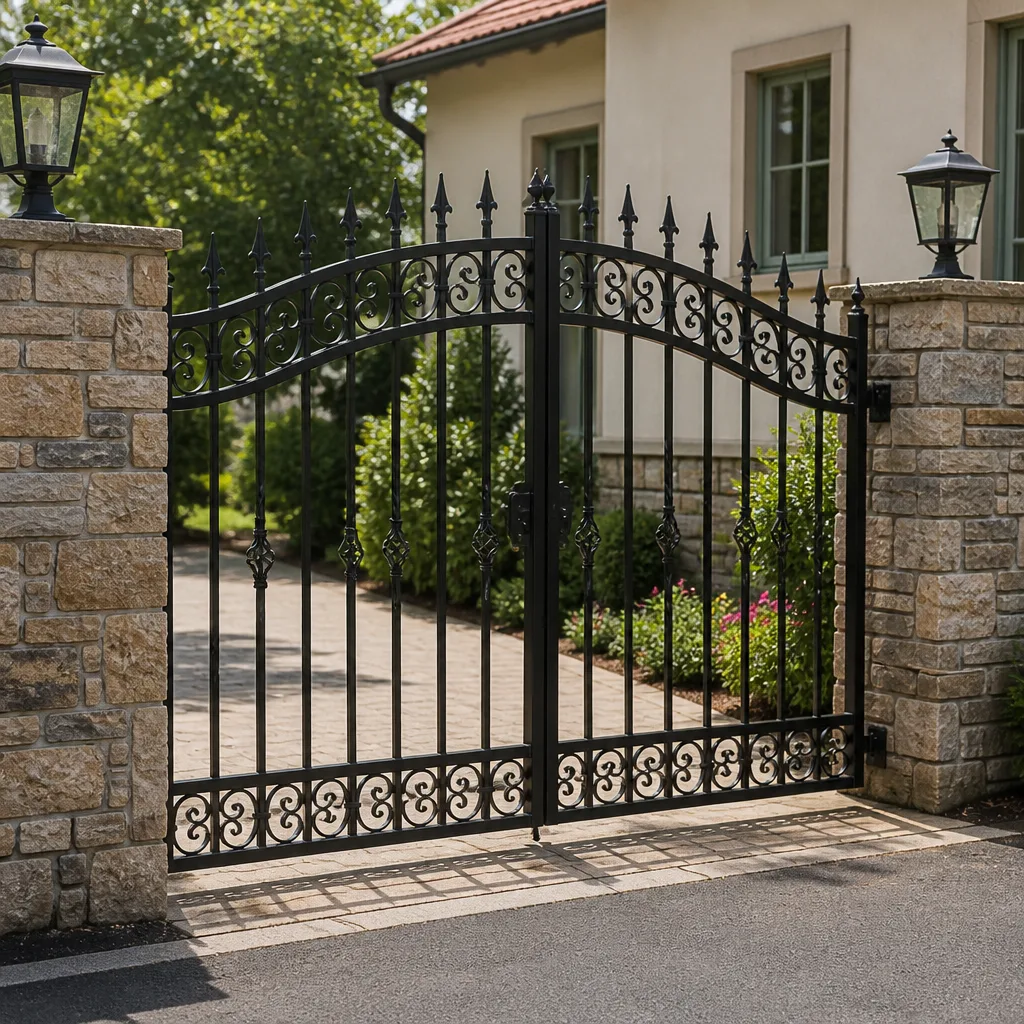 Wrought iron
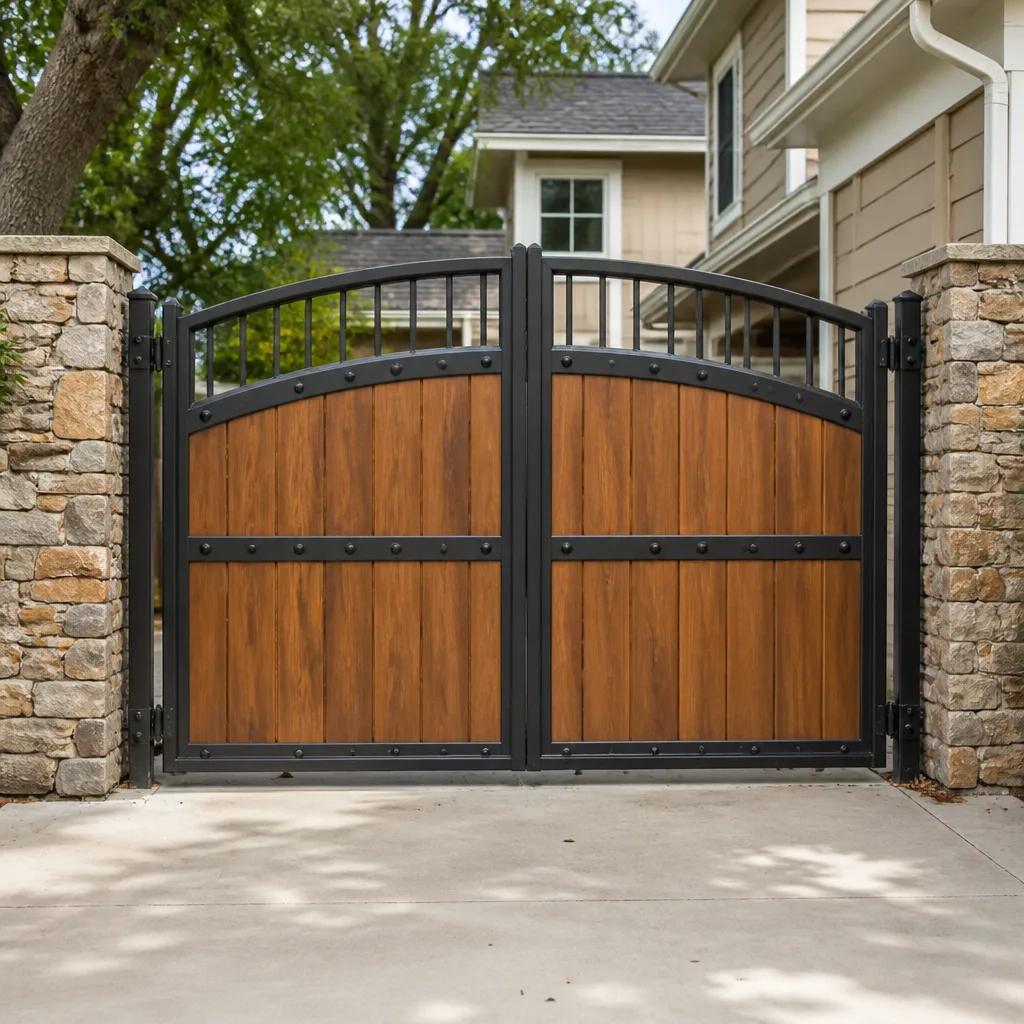 Wood & steel frame
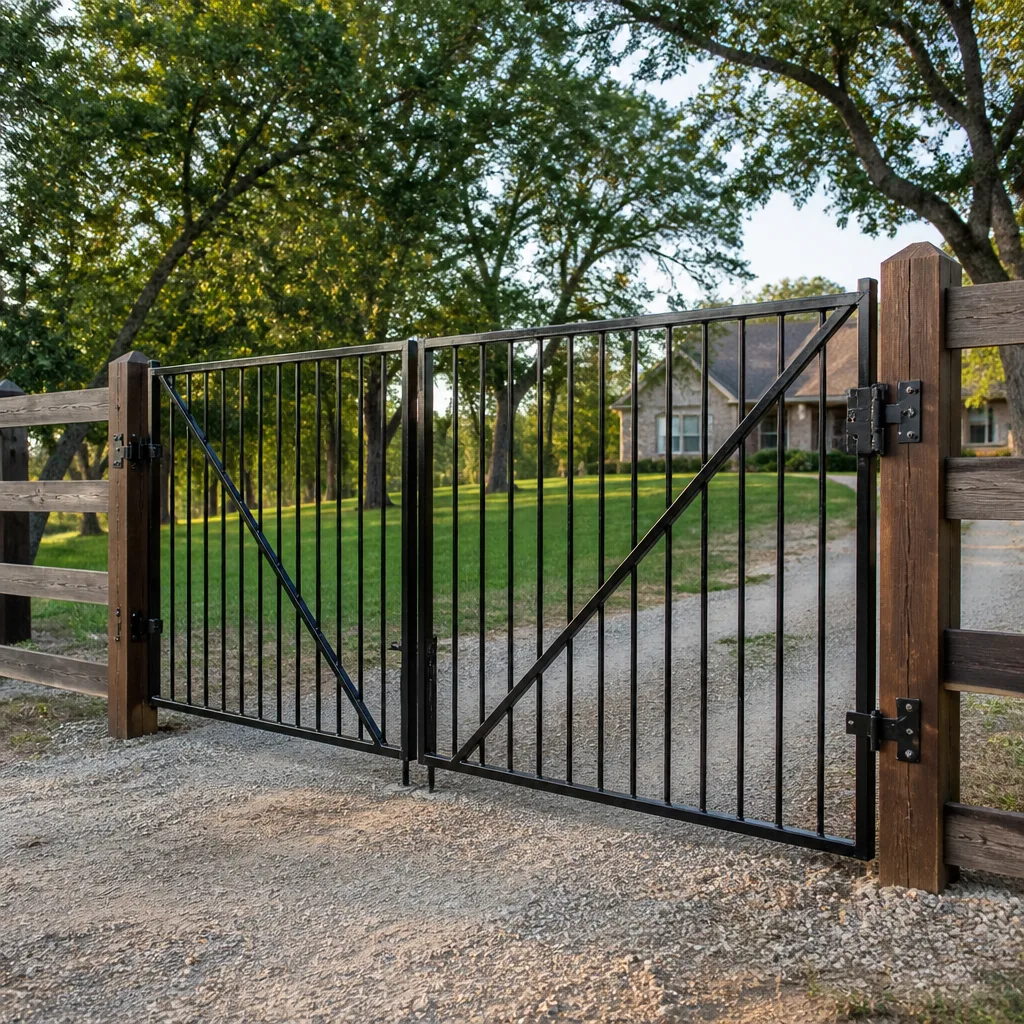 Farm & ranch
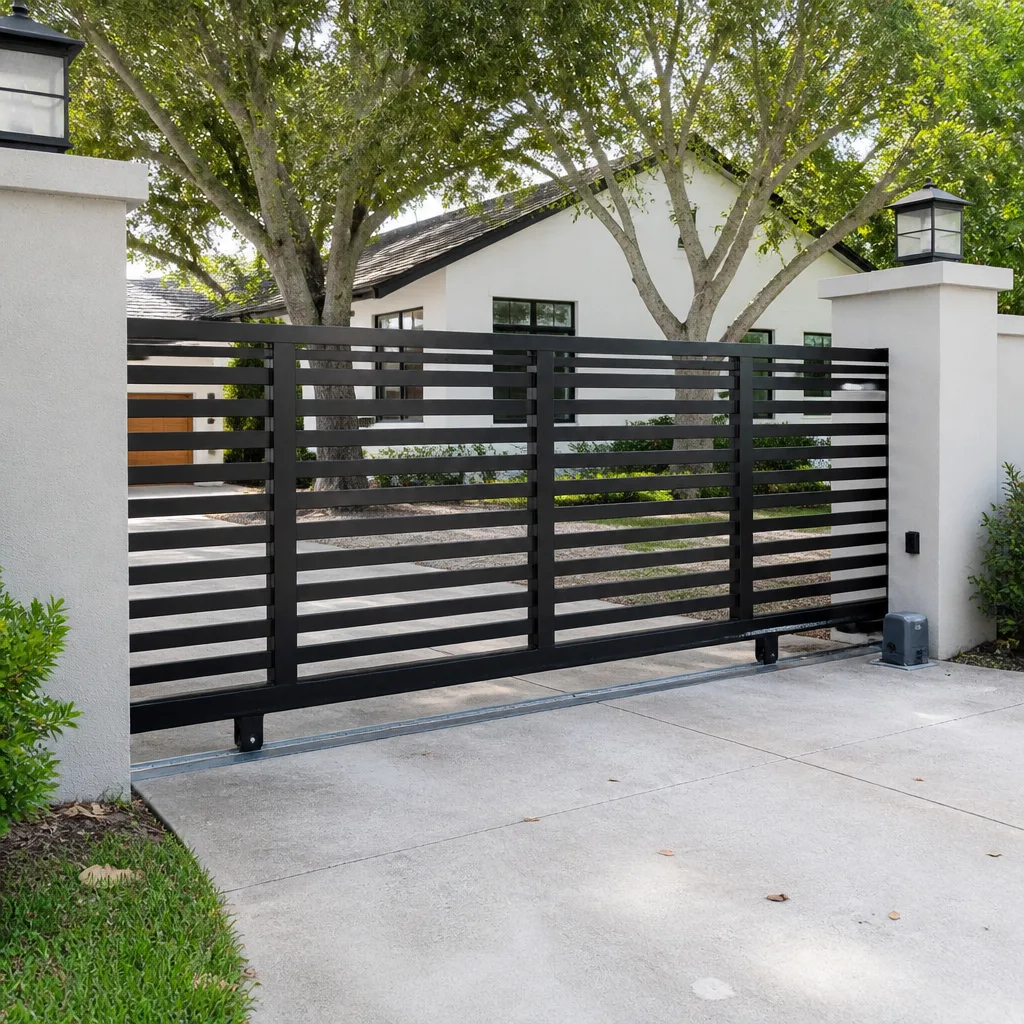 Sliding driveway gates
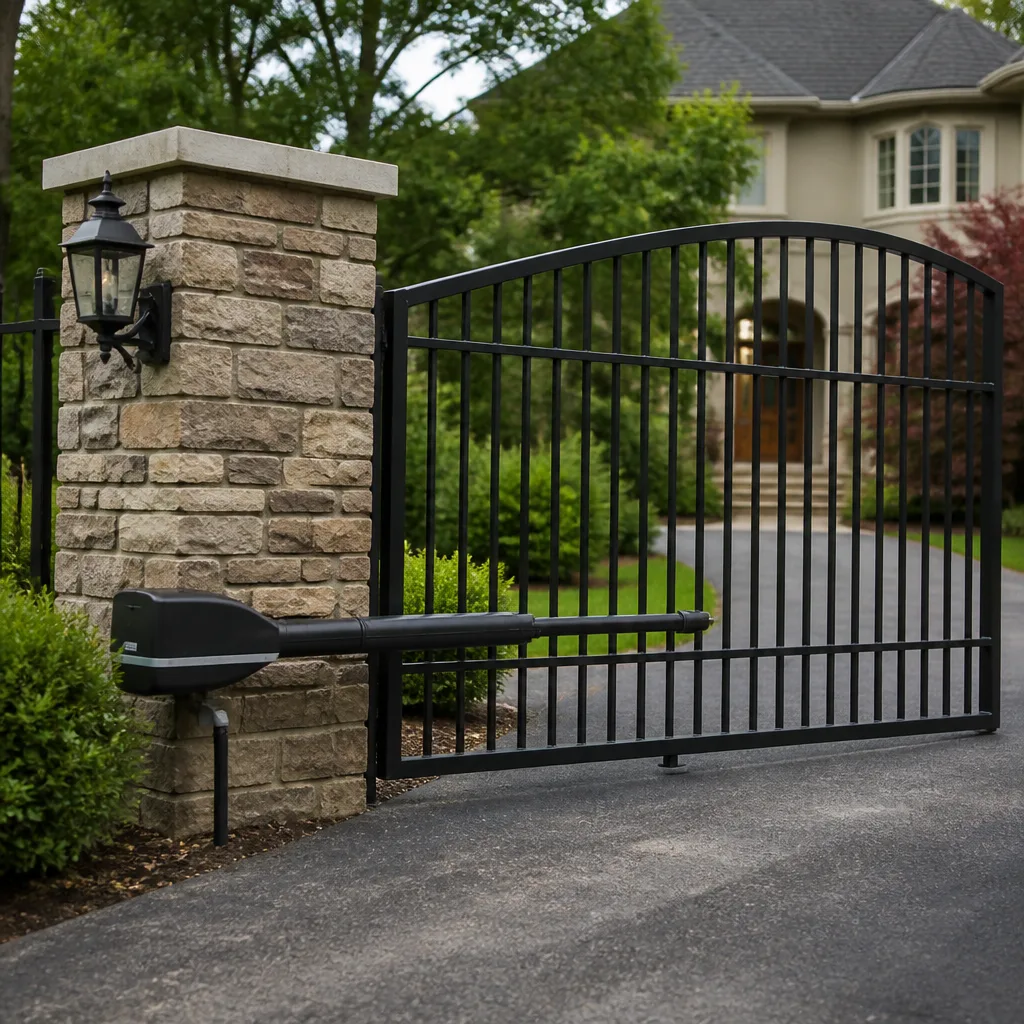 LiftMaster operators
Free on-site gate assessment - hinges, posts, and your LiftMaster or Nice gate operator checked before anything is quoted
The assessment is free and the quote is the invoice.
Get your free estimateGate Repair Troubleshooting in Pearl District: Common Problems and How to Fix Them
Most gate failures look mysterious from the driveway and turn out to be simple from the control box. The gate stops halfway, the remote goes quiet, the arm grinds, and it’s easy to assume the whole operator is finished. In our experience, the fault almost always sits in one of five systems: power supply, control board, motor and drive, hardware alignment, or the safety sensors. Knowing which of those five your symptom belongs to tells you whether you’re looking at a reset button or a job for a technician. This guide gives you that decision tree, built around the wet winters and older industrial fabric of Pearl District.
Quick Answer
To troubleshoot a gate in Pearl District, check power at the breaker and the operator’s reset first, then clear and realign the safety sensors, then look at the hardware. Around 40% of emergency gate calls we hear about turn out to be a tripped reset button or a dead battery in the remote. Anything involving the control board, live wiring, or a motor that hums without moving needs a dedicated gate technician, not a general handyman.
Styles & brands we work with
- Wrought iron
- Wood & steel frame
- Farm & ranch
- Sliding driveway gates
- LiftMaster operators
Table of Contents
- The Five Root Causes Behind Almost Every Gate Failure
- The Diagnostic Order That Saves Time and Money
- How Portland’s Wet Winters Attack Limit Switches and Sensor Eyes
- Safe Checks You Can Do Yourself vs. Live-Wire Risks
- Symptom-to-Cause Matrix for Common Pearl District Gate Brands
- Why Obstruction Sensors Cause More Grief Than Any Other Part
- When the Problem Is the Gate Itself, Not the Operator
- Why Electric Gate Repair Needs a Specialist
The Five Root Causes Behind Almost Every Gate Failure
Every gate fault we diagnose in Pearl District lands in one of five categories. Sort your symptom into the right box and you’ve already halved the work.
1. Power supply
No lights, no beep, no response. Check the breaker that feeds the operator and any dedicated disconnect at the post. Solar and battery operators, common on Mighty Mule units, may simply have a flat battery after a stretch of grey weather.
2. Control board
The board is the operator’s brain. Symptoms include erratic behavior, a gate that opens but won’t close, or a board that clicks and does nothing. Boards fail from moisture, power surges, and insects getting into the enclosure. This is a live-wire component and not a homeowner repair.
3. Motor and drive
You’ll hear it before you see it: grinding, humming without movement, or a slow, labored cycle. On swing operators it’s often the gear or the arm; on slide gates it’s the drive gear or the chain. A motor that hums but doesn’t move is trying to work against a jam or a dead capacitor.
4. Hardware alignment
Hinges sag, posts shift, wheels wear flat, tracks fill with grit. The operator then fights the gate instead of moving it, and the safety system trips. If your gate drags by hand, the operator isn’t the culprit.
5. Obstruction sensors
Photo eyes, safety edges, and loop detectors. A dirty or misaligned eye will stop a gate mid-travel every time, and it’s the single most common cause of “the gate just stopped.”
The Diagnostic Order That Saves Time and Money
Check in this order. Power and sensors first, hardware last. Skipping ahead to the motor is how people buy parts they don’t need.
- Confirm power. Breaker on, disconnect closed, battery charged if the operator runs on solar.
- Test the safety sensors. Wipe the eyes, check the indicator light on each, and confirm nothing is blocking the beam.
- Try a second remote or the wall keypad. This isolates a dead remote battery from an operator fault.
- Release the operator and move the gate by hand. If it drags, binds, or won’t sit level, the problem is hardware.
- Listen to the motor. Grinding or humming without movement points to the drive.
- Only then consider the control board. Board faults are the diagnosis of exclusion, and opening that enclosure is a job for a technician.
That sequence is the same one our technicians run on every gate repair call in Pearl District, and it’s why most visits end with a small fix rather than a replacement quote. From the motor to the access panel, we diagnose before we recommend.
How Portland’s Wet Winters Attack Limit Switches and Sensor Eyes
Pearl District gets rain for months on end, and that changes the failure pattern completely. Guides written for dry climates barely mention moisture. Here, it’s the leading cause of repeat faults.
Two components suffer most. Limit switches, which tell the operator where the gate should stop, sit low on the post or inside the operator housing where water pools after a storm. When moisture gets into the switch, the gate loses its stopping point and either over-travels or reverses halfway. Sensor eyes are the second casualty: a bead of water on the lens, or a film of grime carried by runoff, breaks the infrared beam and the gate refuses to close.
- Limit switch corrosion shows up as the gate stopping in the wrong place or reversing for no reason.
- Sensor eye fogging is most common on cool mornings after a wet night.
- Water in the control enclosure can short a board outright if the gasket has failed.
- Rusting hinges and rollers add drag that the operator has to fight.
You can’t stop the rain in Pearl District, but you can keep the eyes clean and make sure the operator housing sheds water properly. If your gate misbehaves every time it rains and works fine when dry, moisture in the switching or the sensors is almost certainly the cause.
Safe Checks You Can Do Yourself vs. Live-Wire Risks
Some checks are safe for anyone. Others can hurt you. Draw the line clearly before you open anything.
Safe to check yourself:
- Reset or power-cycle the operator at its own switch or breaker.
- Replace the battery in your remote and re-test.
- Wipe the sensor eyes with a soft cloth and confirm the indicator lights.
- Clear debris from the track or the swing path.
- Release the operator and push the gate by hand to feel for drag.
Requires a specialist:
- Anything inside the control box, where mains voltage and low-voltage wiring sit together.
- Any exposed or damaged wiring, especially after a storm.
- A gate that reverses or moves on its own.
- Motor or capacitor replacement.
- Safety edge or loop-detector faults.
Electric gates combine high voltage with heavy moving parts, and both can injure seriously if handled wrong. When in doubt, leave the panel closed and call us. There is no gate problem worth a shock or a crushed hand.
Symptom-to-Cause Matrix for Common Pearl District Gate Brands
Different brands fail in their own patterns. Here’s a matrix for the operators we work on most around Pearl District, including Mighty Mule, LiftMaster, and Elite. Our technicians are experienced across nine major brands, so we’re not guessing when yours comes up.
- Mighty Mule – no movement, no beep: most often battery or solar charge, not the motor. Check the battery first.
- Mighty Mule – arms moves, gate barely budges: usually a weak battery under load or a binding hinge. Release and test by hand.
- LiftMaster – gate reverses immediately: obstruction sensor or a misaligned safety eye. Wipe and realign before anything else.
- LiftMaster – remote stopped working: dead remote battery or a lost receiver code. Test the wall control to separate the two.
- Elite – grinding on opening: drive gear or worn hinge. Have it looked at before the gear strips further.
- Elite – erratic stops: limit switch trouble, frequently moisture-related in Pearl District.
- Any brand – humming, not moving: jam, dead capacitor, or seized drive. Stop cycling it and get it checked.
This matrix narrows the field, but it won’t replace a proper diagnostic on site. If your brand isn’t listed, it’s still worth a call; the diagnosis method is the same regardless of the name on the housing. For motor and opener specifics, see our gate motor & opener page.
Why Obstruction Sensors Cause More Grief Than Any Other Part
If we had to pick the single most common reason a gate in Pearl District stops working, it’s the safety sensor. It’s also the most fixable.
A gate operator won’t close if it can’t confirm the path is clear. That’s a safety feature, and it’s working as designed. The trouble is how easily the beam gets interrupted: a leaf, a cobweb, condensation on the lens, a post that’s shifted a quarter inch over the winter, or a wire nicked by a mower. Any one of those stops the gate dead.
What to check:
- Look at both sensor eyes and confirm the indicator light on each is solid.
- Wipe both lenses clean with a dry cloth.
- Check that the two units still line up. A nudge to one post after a storm is enough to break the beam.
- Clear any debris or plant growth between them.
- Re-test the gate through a full cycle.
If the light stays off after all that, the sensor or its wiring has failed, and that’s a technician call. We always check power and sensors before touching hardware on a Pearl District job, because nine times out of ten the gate was fine all along and the sensor was the problem.
When the Problem Is the Gate Itself, Not the Operator
Owners often replace a perfectly good motor because the gate is dragging. Before you spend money on electronics, test the gate by hand.
Release the operator using its manual release lever, then push the gate through its full travel. It should move smoothly with light effort. If it binds, scrapes, or refuses to sit level, the fault is mechanical.
- Sagging hinges on swing gates drop the leaf and make it catch the ground.
- Shifted posts change the geometry, so the operator pushes at the wrong angle.
- Worn wheels or rollers on slide gates create flat spots that jam the track.
- Debris in the track blocks travel and strains the drive gear.
- Loose mounting brackets let the operator work itself out of alignment.
In Pearl District, older industrial buildings and warehouse conversions often have gates mounted to structures that have moved over the years. A post that was true a decade ago may not be now. Aligning hardware is usually cheaper and faster than a motor replacement, and it’s the honest fix when the operator is healthy. When the time comes for a new system, our gate installation work starts from the posts up, so alignment is right from day one.
Why Electric Gate Repair Needs a Specialist
Electric gates bring together mains power, low-voltage control, moving steel, and access electronics. That combination is why many general handymen won’t touch them, and why a dedicated gate technician is the safer call.
A generalist can swap a battery. Diagnosing a control board fault, aligning a safety edge, or programming a new access keypad is a different job. Those tasks need someone who understands the whole system, from the motor to the access panel. We specialize exclusively in gate systems, so every visit is about the gate and nothing else, and we cover the full lifecycle: repair, new installation, motor and opener service, and access control programming.
That depth means we work on your brand rather than learning it on your driveway. We’re experienced with LiftMaster, FAAC, BFT, Linear, Viking, Ghost Controls, DoorKing, Elite, and Mighty Mule, and that range matters when a brand-specific fix is available: we’re not going to push a full replacement when a targeted repair will do. If you’d like the big picture on how we work across Pearl District, start at Gate Repair Pearl District.
Common Mistakes to Avoid
- Replacing the motor before checking the sensors. A dirty or misaligned eye stops a gate just as convincingly as a dead motor, and it costs far less to fix.
- Forcing the gate by hand while the operator is engaged. That strips gears and bends arms. Always use the manual release first.
- Opening the control box to “have a look.” Mains voltage lives in there. Let a technician take that panel off.
- Ignoring a rain-related pattern. In Pearl District, a gate that fails only after wet weather is telling you moisture has reached a limit switch or sensor. Fix the cause, not the symptom.
- Buying a replacement board online without diagnosis. Boards are expensive and non-returnable once fitted. Confirm the fault first.
- Skipping the manual-release test. Pushing the gate by hand is the fastest way to tell an operator fault from a hardware fault, and most owners never try it.
- Letting a small alignment issue run for months. A gate that drags wears out the drive faster. Catching it early is the cheaper path.
See the difference
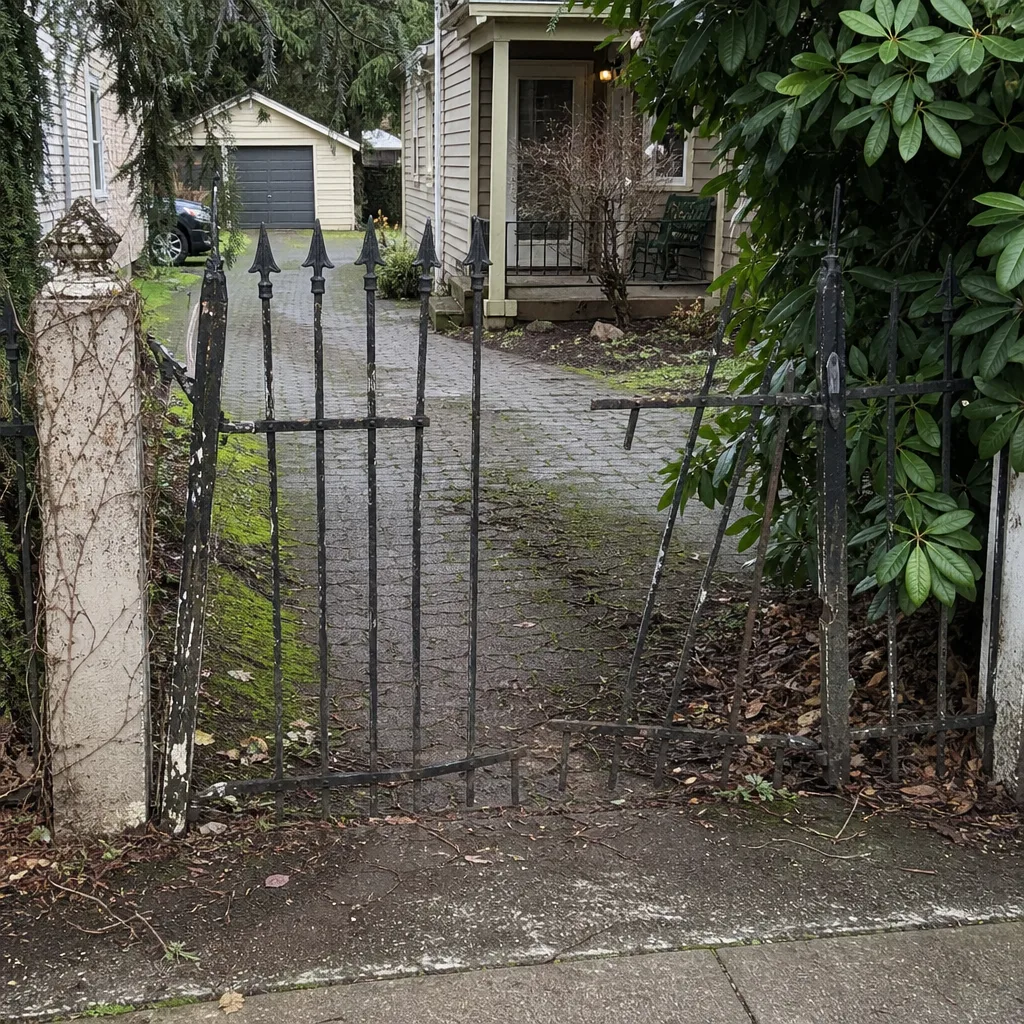 Before
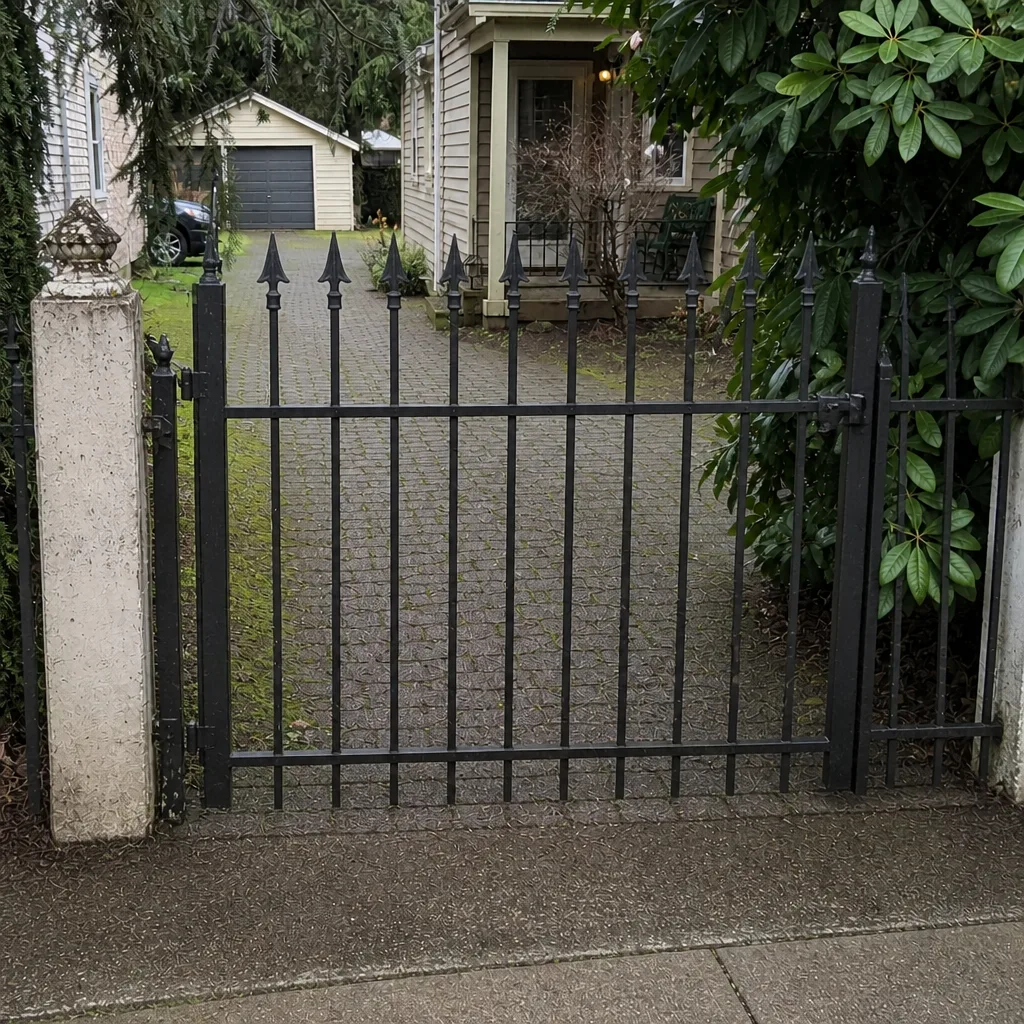 After
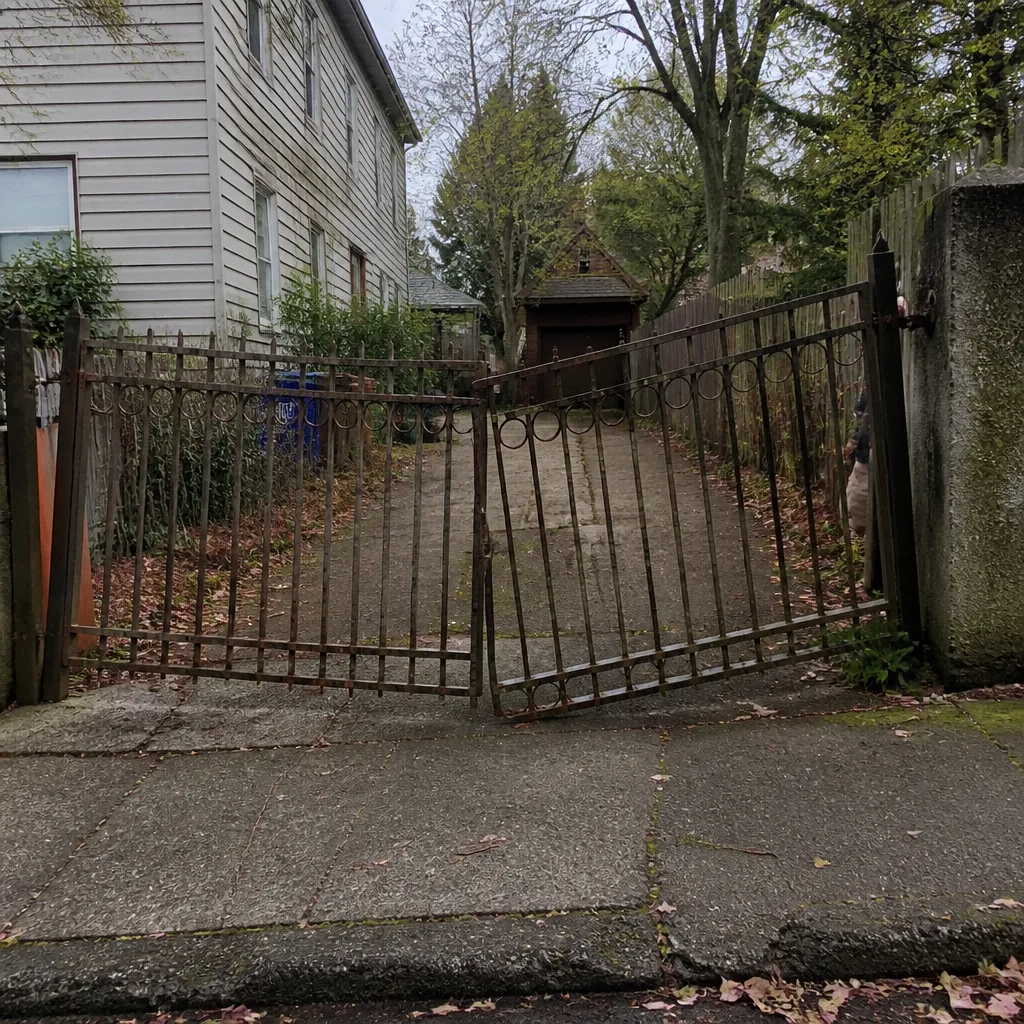 Before
 After
 Before
 After
When to Call a Professional
Call a specialist if the gate moves on its own, if you see damaged or exposed wiring, if the operator hums but won’t move, or if the control box shows signs of water. Call us too if the sensor light stays off after cleaning, if a hinge or post has shifted, or if your brand needs access-control programming you can’t do from the remote. Electric gates carry real injury risk, so anything past a reset, a battery swap, and a wipe of the eyes is better handled by a dedicated gate technician. Gate Repair Pearl District offers free estimates in Pearl District, and our technicians have up to 9 years of experience across the major gate brands. Call (833) 482-6184.
Frequently Asked Questions
A blocked or misaligned safety sensor is the most common cause, followed closely by a tripped reset or a dead remote battery. Wipe both sensor eyes, confirm the indicator lights, and check for anything breaking the beam. If that doesn’t solve it, call (833) 482-6184 for a free estimate.
You can safely handle a reset, a remote battery change, a sensor wipe, and a manual-release test. Anything inside the control box, any exposed wiring, and any motor fault should go to a technician. Electric gates combine mains voltage with heavy moving parts, and that combination isn’t a DIY job.
Moisture is reaching a limit switch, a sensor eye, or the control enclosure. Portland’s long wet winters make this one of the most common faults we see in Pearl District. A gate that misbehaves in wet weather and works when dry is pointing straight at the sensors or the switches. Call (833) 482-6184 and we’ll diagnose it properly.
We’re experienced with LiftMaster, FAAC, BFT, Linear, Viking, Ghost Controls, DoorKing, Elite, and Mighty Mule. That range means we’re not learning your operator on the driveway. If your brand isn’t listed, still call (833) 482-6184, because the diagnosis method is the same regardless of the name on the housing.
We repair first whenever a repair is the right answer. We only recommend replacement when the drive or board is beyond a sensible fix. Our technicians have up to 9 years of experience, so they can tell the difference. Call (833) 482-6184 for a free estimate in Pearl District.
Yes. Access control is part of what we do, from remote programming and keypad setup to smart-entry integration. We handle the whole system, from the motor to the access panel. Call (833) 482-6184 to book a free estimate.
The Bottom Line
Most gate failures in Pearl District come down to five systems: power, board, motor, hardware, and sensors. Check in that order, power and sensors first, hardware last, and you’ll skip most of the guesswork. The fixes you can safely do yourself are the small ones: reset, battery, sensor wipe, manual-release test. Everything inside the panel or at the motor belongs with a dedicated gate technician. Wet weather will keep testing your gate every winter, so clean sensors and true alignment are your best defense. When the fault is past the simple checks, we’re one call away.
If your gate needs a proper look, call Gate Repair Pearl District at (833) 482-6184 for a free estimate. We’ll diagnose the fault, quote the fix before any work starts, and get your gate moving again.
Written by the team at Gate Repair Pearl District.