Last updated November 25, 2026
 Wrought iron
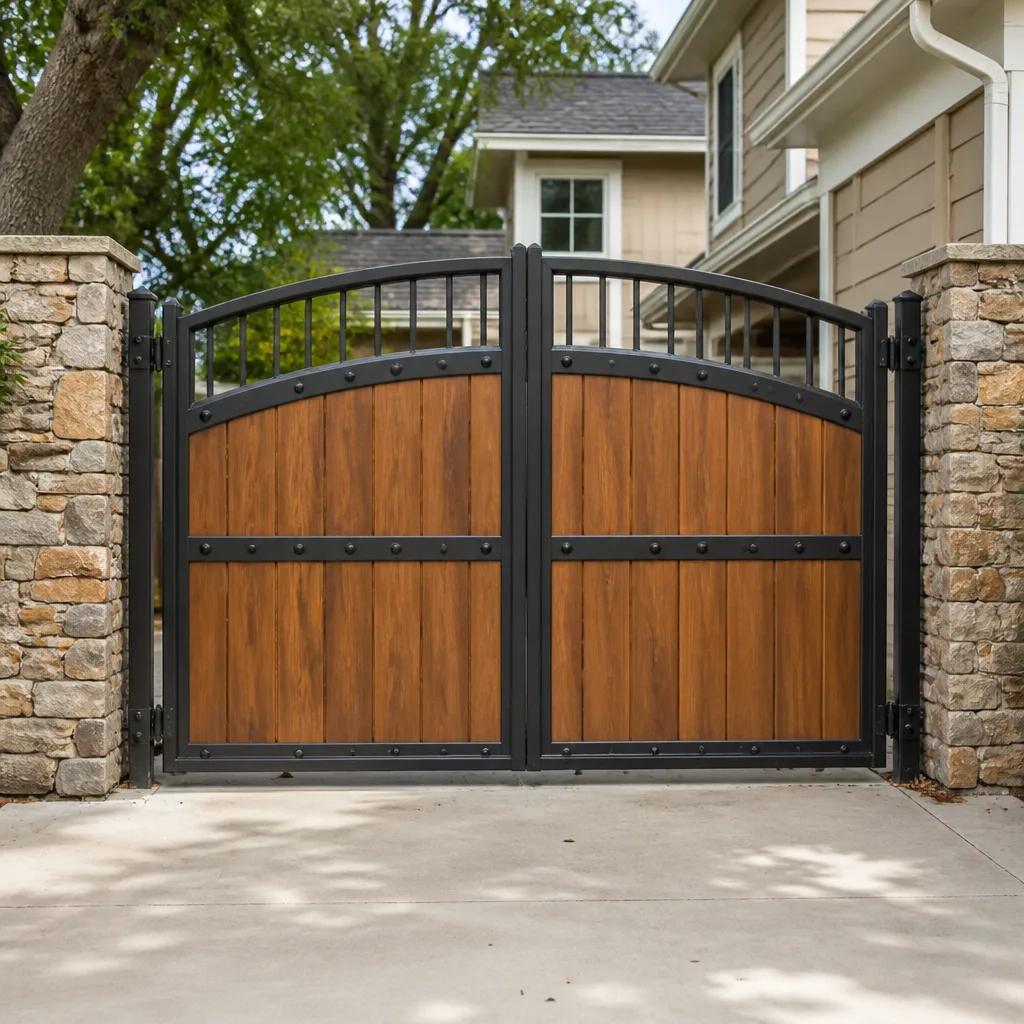 Wood & steel frame
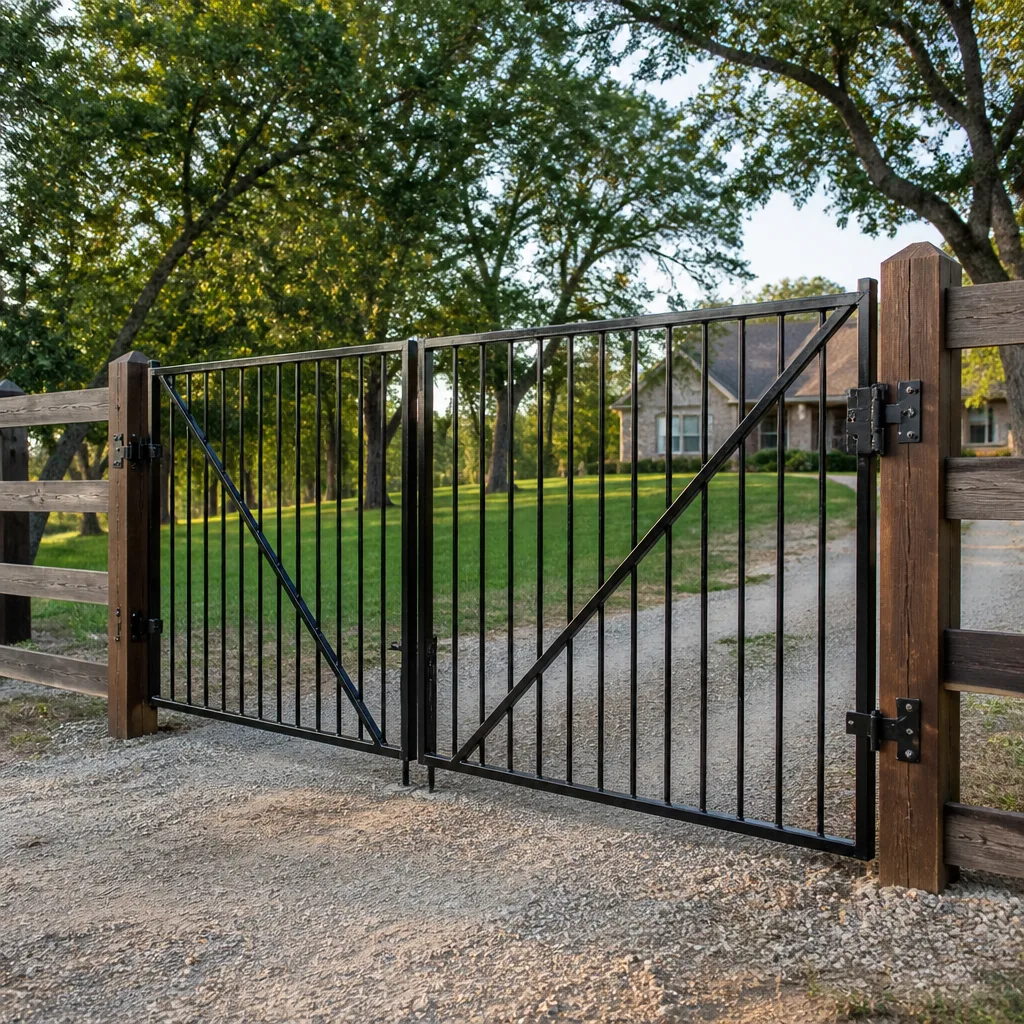 Farm & ranch
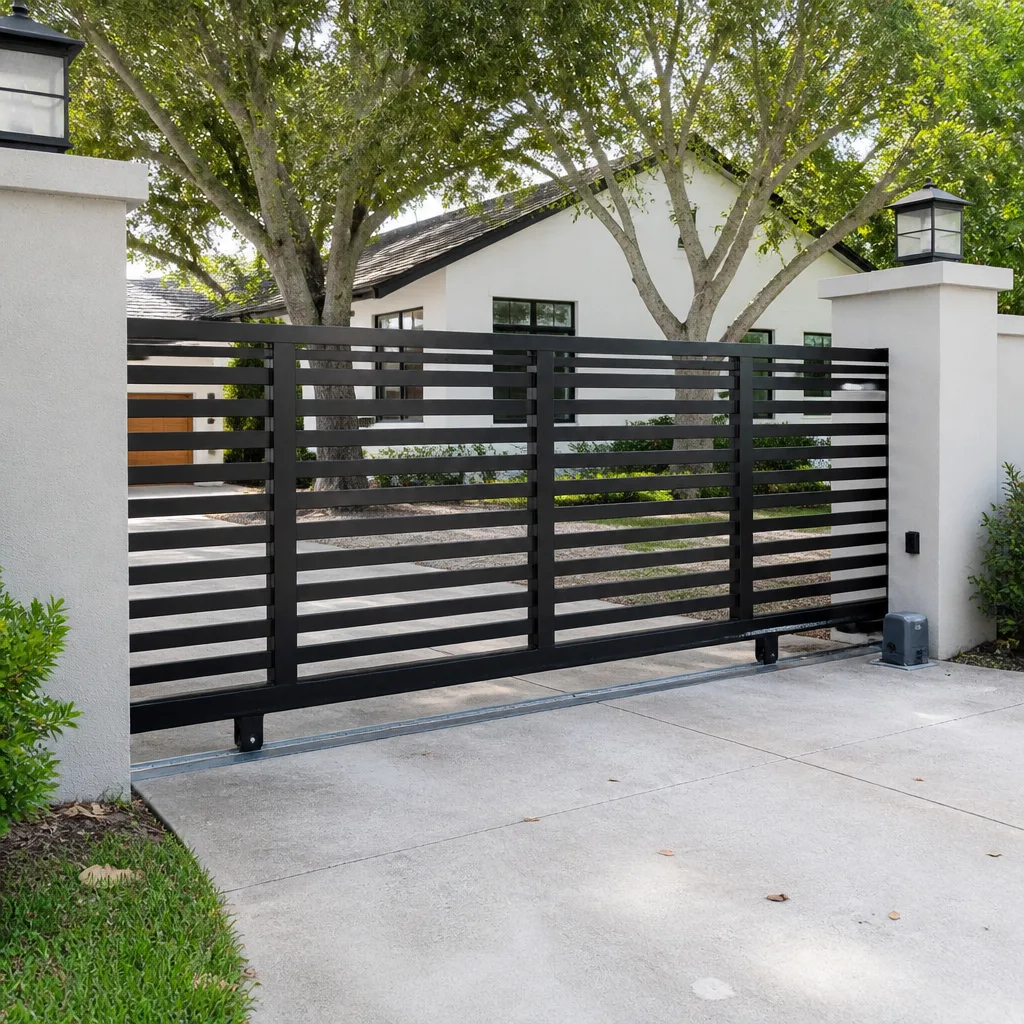 Sliding driveway gates
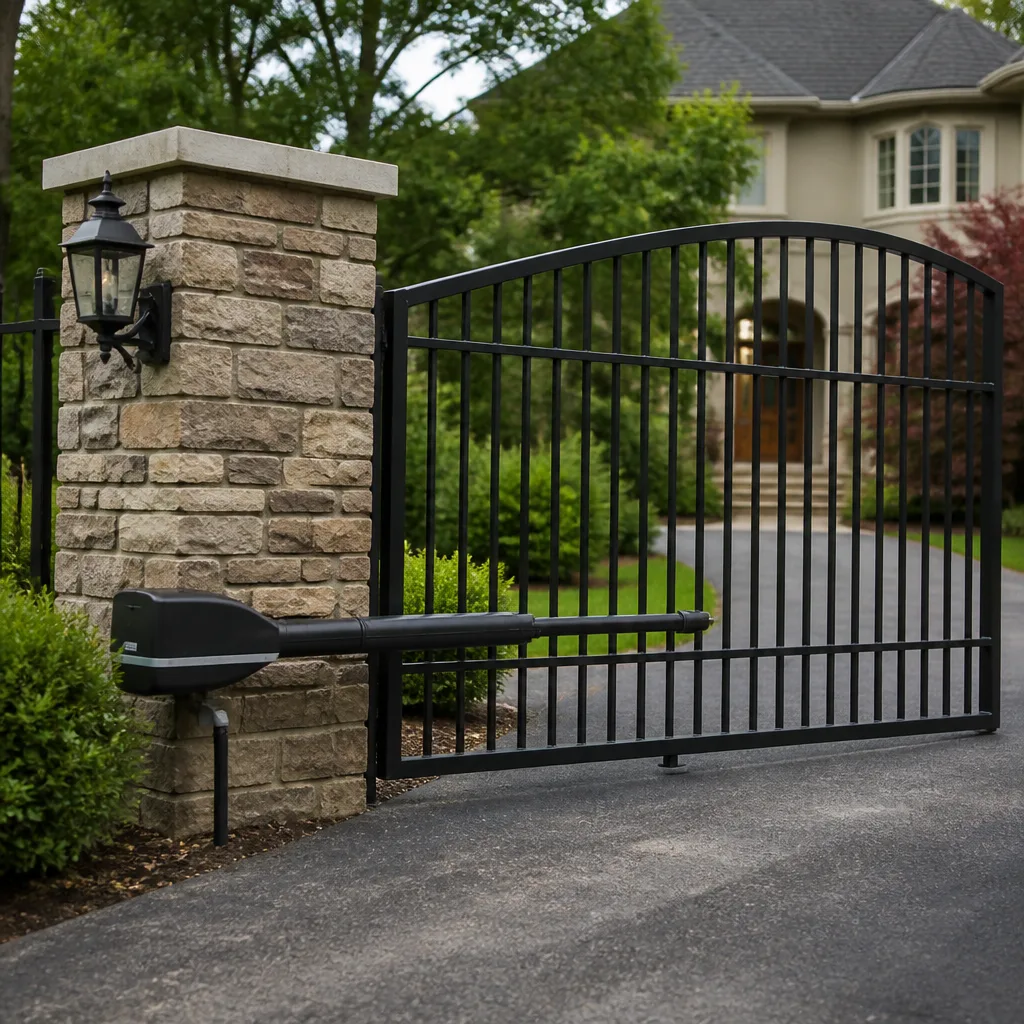 LiftMaster operators
Free on-site gate assessment - hinges, posts, and your LiftMaster or Nice gate operator checked before anything is quoted
The assessment is free and the quote is the invoice.
Get your free estimateGate Repair Maintenance Schedule: What to Do and When
Most gate failures don’t happen in a random month. In our experience across Pearl District, gate operators tend to quit in February, when a winter of freeze-thaw cycling has quietly loosened bolts and stiffened hinges, and again in August, when dry summer dust packs into tracks and chains. A quarterly checklist that treats every month the same misses both. Gates here don’t wear out on a calendar so much as on the weather. This guide maps every maintenance task to the month it actually matters in Portland’s climate, from lubricant choices that hold up in the wet to the torque points that loosen as temperatures swing. You’ll leave knowing what to check, when to check it, and how to log it so a technician can diagnose a fault faster.
Quick Answer
A working gate maintenance schedule in the Pearl District runs on a monthly-plus-seasonal rhythm: a quick visual and safety-sensor check every month, hinge and track lubrication every three to four months with a wet-climate lubricant, a full hardware torque pass before and after winter, and operator battery and backup checks twice a year. The biggest wins come from aligning tasks to Portland’s wet-season and dry-season shifts rather than a generic quarterly list.
Styles & brands we work with
- Wrought iron
- Wood & steel frame
- Farm & ranch
- Sliding driveway gates
- LiftMaster operators
Table of Contents
- Why a Seasonal Schedule Beats a Generic Checklist
- The Pearl District Month-by-Month Calendar
- Which Lubricants to Use in Portland’s Wet Climate
- Battery and Backup Power Checks for Electric Operators
- The Three Torque Points That Loosen by Mid-Winter
- How to Log Maintenance So It Actually Helps a Technician
- Matching the Schedule to Your Gate Type
- Common Mistakes to Avoid
Why a Seasonal Schedule Beats a Generic Checklist
Gate hardware responds to temperature and moisture, not to a printed interval. In the Pearl District, the year splits into a wet stretch where rain and temperature swings between freezing and thawing put stress on joints and electrical connections, and a dry stretch where dust, grit, and UV exposure take over. The same gate needs different attention in each.
A generic quarterly checklist runs every task at the same interval all year. That means you might grease a chain right before the dry season when it needs it least, then ignore it during the wet months when water is working into the links. Or you check a standby battery in mild weather when it reads fine, and never test it when cold nights are actually draining it.
The smarter approach: assign each task to the point in the year when the condition it protects against is most present. That’s what the calendar below does. It’s the same schedule our technicians work from when they service Gate Repair Pearl District systems across manual swing gates, sliding gates, and motorized operators.
- Wet-season tasks protect against water intrusion, loosened hardware, and cold-related battery drain.
- Dry-season tasks protect against dust in tracks, sun-baked seals, and grit in chains.
- Year-round tasks cover safety, since a gate that closes on a person or vehicle is a hazard regardless of month.
The Pearl District Month-by-Month Calendar
Here’s how a full year breaks down when the schedule is tuned to local weather. Use this as a framework and adjust for your specific gate, its traffic, and whether it’s manual or motorized.
- Late winter (February): Full hardware torque pass on hinges, brackets, and the operator mount. Inspect for water trapped in the track or housing after freeze-thaw. Test the safety sensors and reverse function. This is peak failure month, so catch it early.
- Early spring (March-April): Deep-clean tracks and chains of winter grit. Re-lubricate hinges, rollers, and the operator’s drive chain with a wet-climate product. Check battery terminals for corrosion from damp air.
- Late spring (May): Inspect gate posts and footings for movement or settling after a wet season. Confirm the gate still swings or slides level and latches cleanly. Check access-control keypads and remotes after months of rain.
- Summer (June-August): Dust and grit are the enemy now. Clean tracks more often if your gate sits near a busy street or construction. Check that the operator isn’t overheating in direct sun. August is the second failure spike, so test the full open-close cycle under load.
- Early fall (September-October): Pre-winter torque pass before temperatures drop. Clean and re-lubricate before the wet season. Test backup battery capacity while the weather is mild so you have time to replace a weak one.
- Late fall (November): Seal or caulk any gaps where water can reach the operator housing or wiring. Confirm drainage around the gate base so standing water doesn’t pool at the footing.
- Winter (December-January): Light monthly checks only. Watch for ice in tracks, listen for new noises, and keep the track clear of debris. Avoid heavy adjustments in freezing conditions.
Manual gates need less of the electrical and battery work but the same hinge, track, and torque attention. Motorized gates carry the full load of this calendar.
Which Lubricants to Use in Portland’s Wet Climate
Lubricant choice is where a lot of gates get quietly damaged. The wrong product attracts grit, traps moisture, or washes away, and by the next wet season you’re dealing with rust on a chain that should have lasted years.
What works well in this climate:
- Hinges and pivot points: a lithium-based or dry PTFE (Teflon) lubricant. Dry-film options resist dust and don’t become a grit magnet.
- Chains: a chain-specific lubricant designed to penetrate the links and stay put. Not general household oil, which flings off and collects grime.
- Sliding tracks: a light silicone spray or graphite. Avoid heavy grease, which holds grit and turns into an abrasive paste.
- Operator gear and drive components: follow the operator brand’s recommendation. Brands like Linear, Viking, and DoorKing each have their own guidance for their drive mechanisms.
What to avoid:
- WD-40 as a long-term lubricant. It’s a decent cleaner and moisture displacer, but it isn’t a lasting lubricant and will dry out hinge points.
- Thick grease on exposed surfaces. In the wet season it traps water and grit and can accelerate rust rather than prevent it.
- Mixing products. Layering a new lubricant over an old one with a different base can create a gummy residue.
Whatever you use, apply it sparingly and wipe off excess. A thin, even film protects better than a heavy coat that collects everything the wind blows in.
Battery and Backup Power Checks for Electric Operators
Electric gates live or die on their backup power. When the grid drops, a gate with a healthy standby battery keeps operating or fails safe; a gate with a weak one can stall mid-travel, leaving it stuck open or closed. In our experience around the Pearl District, power fluctuations drain standby batteries faster than the manufacturer’s manual typically predicts, so twice-a-year checks matter more than the printed interval suggests.
What to check and when:
- Twice a year (early spring and early fall): inspect battery terminals for corrosion and tightness. Damp air promotes corrosion, so this is a wet-climate priority.
- Test under load: don’t just check voltage at rest. Run a full open-close cycle on battery power and see how the operator behaves. A battery that reads fine at rest can sag under the draw of a motor.
- Check the charge circuit: confirm the operator’s charging system is actually topping the battery. A failing charger means a battery that keeps dying no matter how new it is.
- Look for age and swelling: a bulging or visibly aged battery should be replaced before it fails mid-cycle.
Brands differ here. Ghost Controls operators have their own battery and solar-charge setups, while DoorKing access systems often tie into building power and standby arrangements. Know which system you have before you test it. If you’re unsure, an gate motor & opener check can confirm your battery and charger are working together.
The Three Torque Points That Loosen by Mid-Winter
Repeated thermal expansion and contraction works on gate hardware the way it works on anything bolted together. As temperatures swing between mild days and freezing nights, fasteners that held tight in summer slowly back off. Three points account for most winter misalignment:
- Hinge mounting bolts. These take the full weight of the gate plus the constant swing cycle. A quarter-turn of give at the hinge becomes sag at the far edge.
- Operator mounting brackets. The bracket tying the operator to the gate or post absorbs the motor’s torque and the gate’s weight. When it loosens, the gate drags, the motor strains, and the arm misaligns.
- Post-mount and anchor fasteners. The bolts anchoring posts or the operator base to the ground can loosen with frost movement and settling. A wobbly post throws everything above it out of alignment.
Do a torque pass in late fall before the freeze sets in and again in late winter to catch what moved. Use the fastener manufacturer’s torque spec where you have it; over-tightening can strip threads or crack cast hardware just as surely as leaving it loose. Check alignment by running the gate through its full travel and watching the gap at the latch and the clearance at the track.
If the gate is already dragging or failing to latch by mid-winter, the looseness has likely progressed past a quick tighten. That’s the point where repair is cheaper than replacement, and where the right fix is a proper look at all three points, not just the one that’s visibly loose.
How to Log Maintenance So It Actually Helps a Technician
Most homeowners keep no record at all, which means that whatever goes wrong next gets diagnosed from scratch. A simple log turns a repair call into a faster diagnosis, and it costs you almost nothing to keep.
What a useful log includes:
- Dates of each lubrication, torque pass, and battery check. Patterns reveal themselves fast.
- What was done and which product was used. The same lubricant every time avoids compatibility surprises.
- What you noticed: new noises, a change in closing speed, a spot that felt loose, a sensor that flickered.
- The operator brand and model, so a technician arrives already knowing the system.
When something does fail, a log with this detail lets a technician skip the guessing and start diagnosing. If you have a Linear or Viking operator, knowing its model and battery history can cut diagnostic time noticeably. If nothing else, note the month of the last full service and the last torque pass. That alone tells a technician whether they’re looking at seasonal wear or something else.
For a full maintenance visit or to set up a service schedule, gate repair starts with a look at your actual log and your actual hardware.
Matching the Schedule to Your Gate Type
Not every gate needs every task. Here’s how the schedule shifts by gate type.
- Manual swing gates: focus on hinges, latches, and posts. Lubricate hinges quarterly, check torque twice a year, and keep the swing clear of ground contact.
- Sliding gates: tracks and rollers are everything. Clean and lubricate the track more often in dry, dusty periods, and confirm the gate can’t jump the track. Slide gates that come off the track are a real hazard, so this check matters.
- Electric and motorized gates: everything above plus the operator, battery, wiring, and safety sensors. Battery and charger checks twice a year, sensor alignment tests monthly.
- Access-control gates: keypads, intercoms, remotes, and smart-entry systems need their own check after wet seasons, when connections can corrode. Test every entry method once a season.
Whatever the type, safety checks stay on a monthly rhythm. A gate is a moving barrier; an out-of-adjustment sensor is a genuine hazard.
Common Mistakes to Avoid
- Running the same list every month regardless of season. A wet-season task applied in dry August, or vice versa, misses the condition it was meant to address. Match the task to the month.
- Greasing a chain with household oil. It flings off, collects grit, and does little to protect against wet-season rust. Use a chain-specific lubricant.
- Skipping the pre-winter torque pass. This is the single task that prevents most mid-winter misalignment. Do it before temperatures drop, not after the gate starts dragging.
- Assuming a battery that measures fine at rest is healthy. Standby batteries sag under motor load. Test under a real open-close cycle.
- Ignoring access-control gear after rain. Keypads and intercom wiring can corrode quietly over the wet months, then fail at the worst moment.
- Adjusting or force-opening a loaded electric operator by hand. Motorized and high-voltage systems can injure; wiring and heavy gate panels are genuinely dangerous. This is not a DIY task. Call a trained professional for anything involving the operator’s power or a gate that’s jammed under motor load.
- Keeping no record. Without a log, every failure is diagnosed from zero, and you lose the pattern that would have told you what to fix next.
See the difference
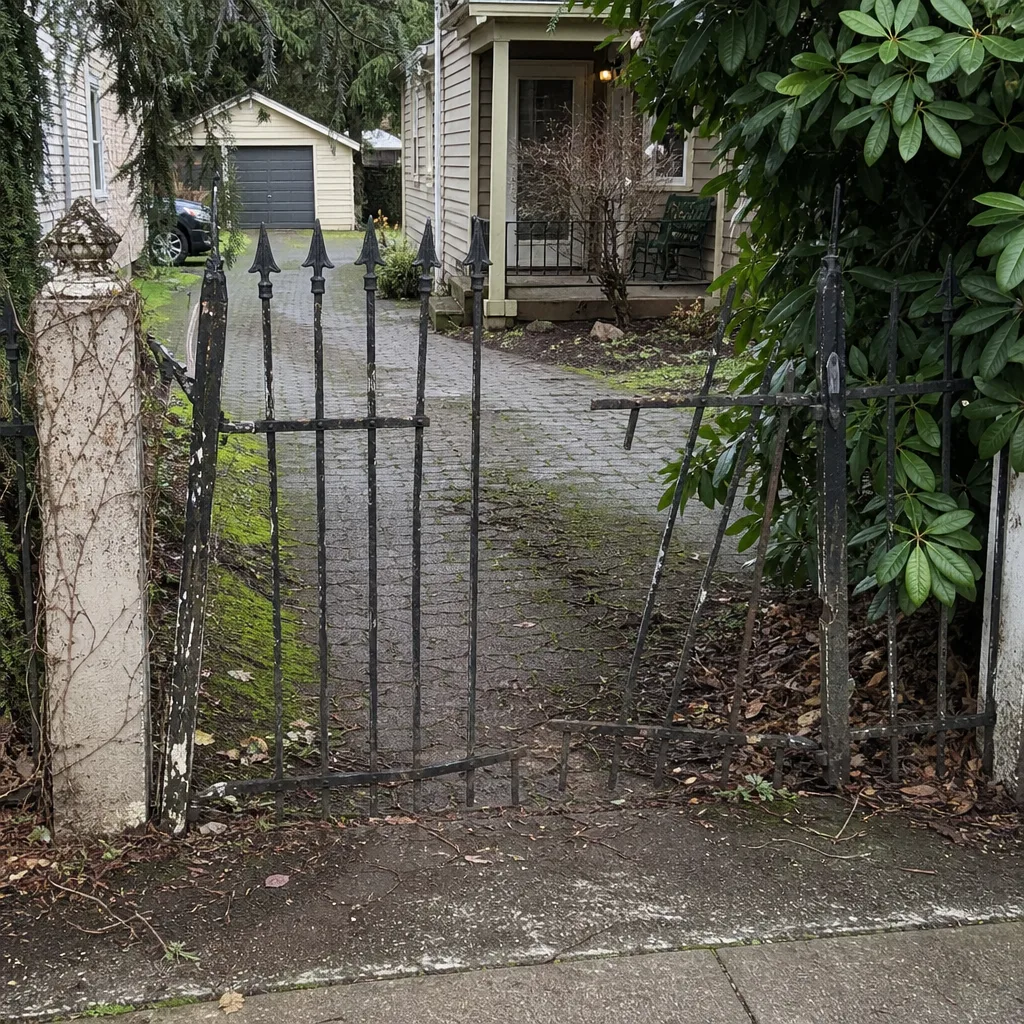 Before
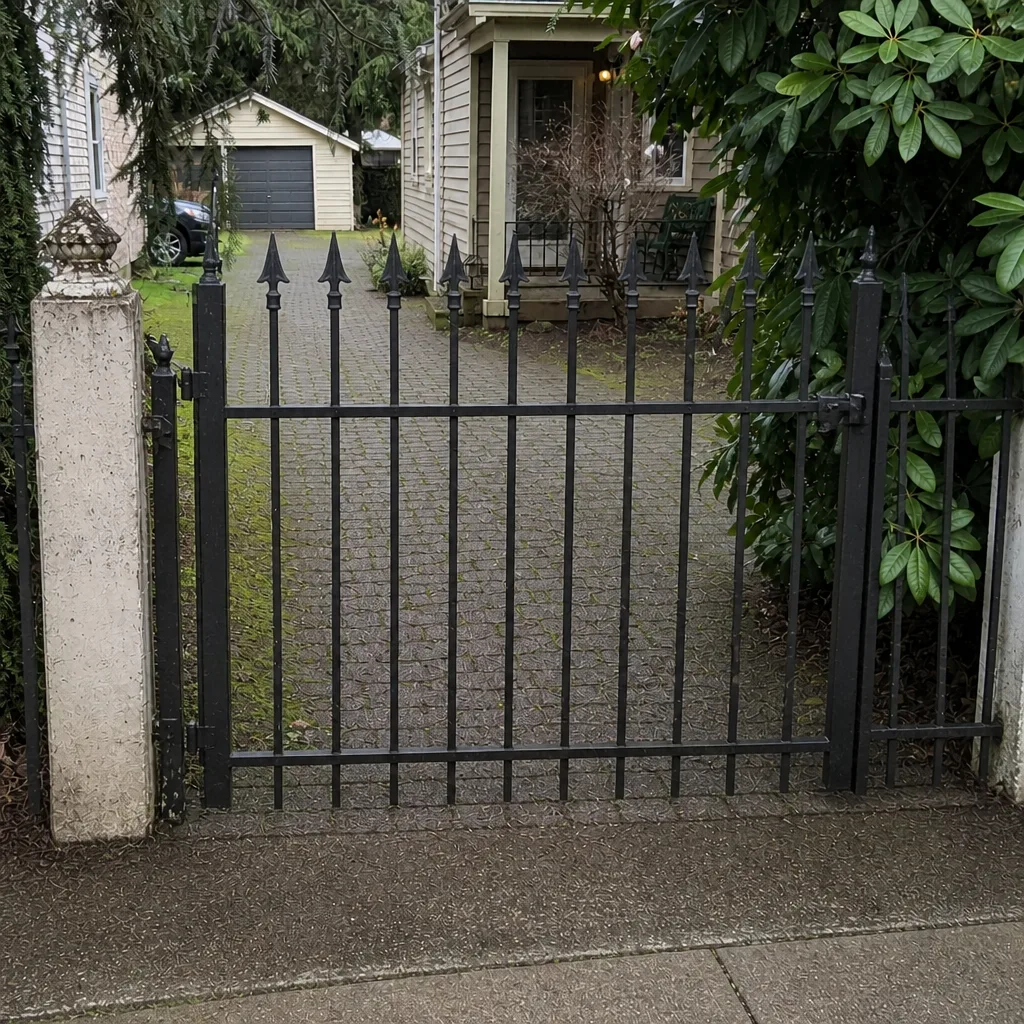 After
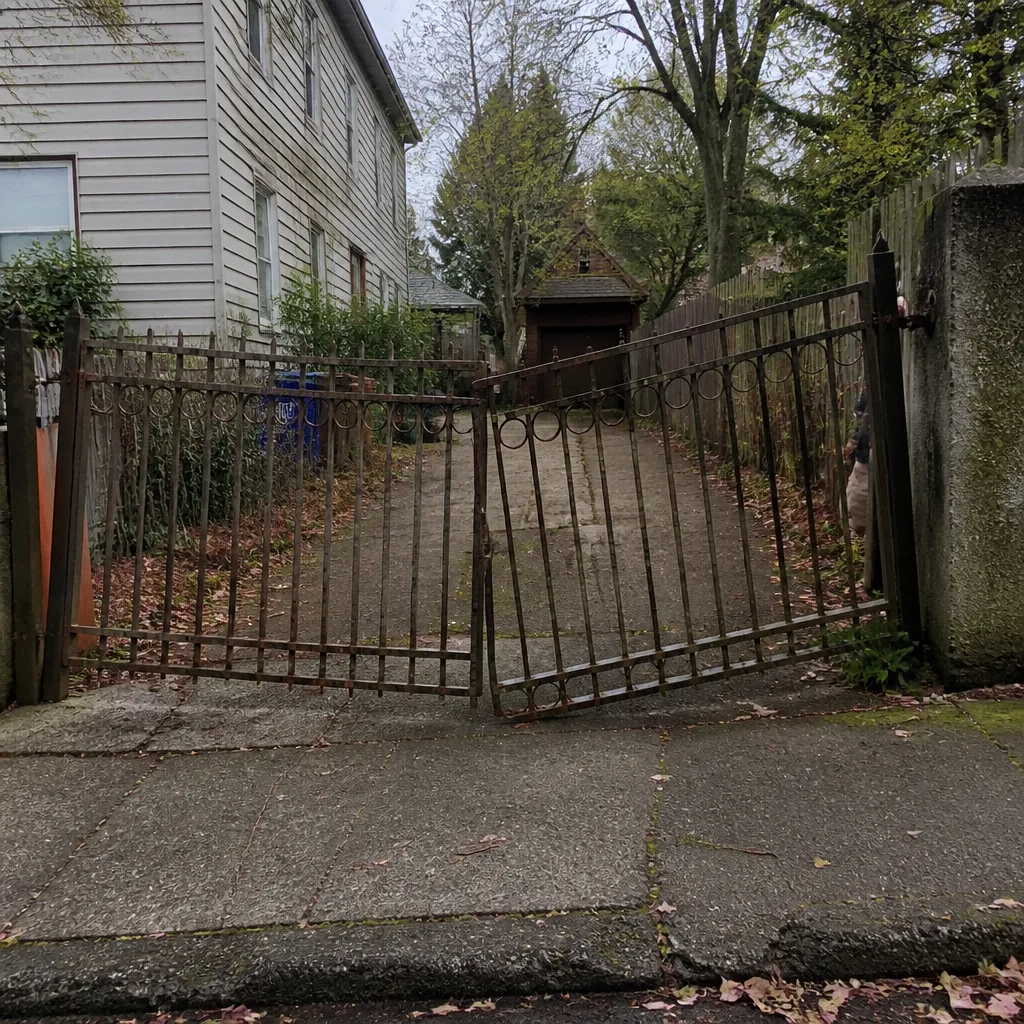 Before
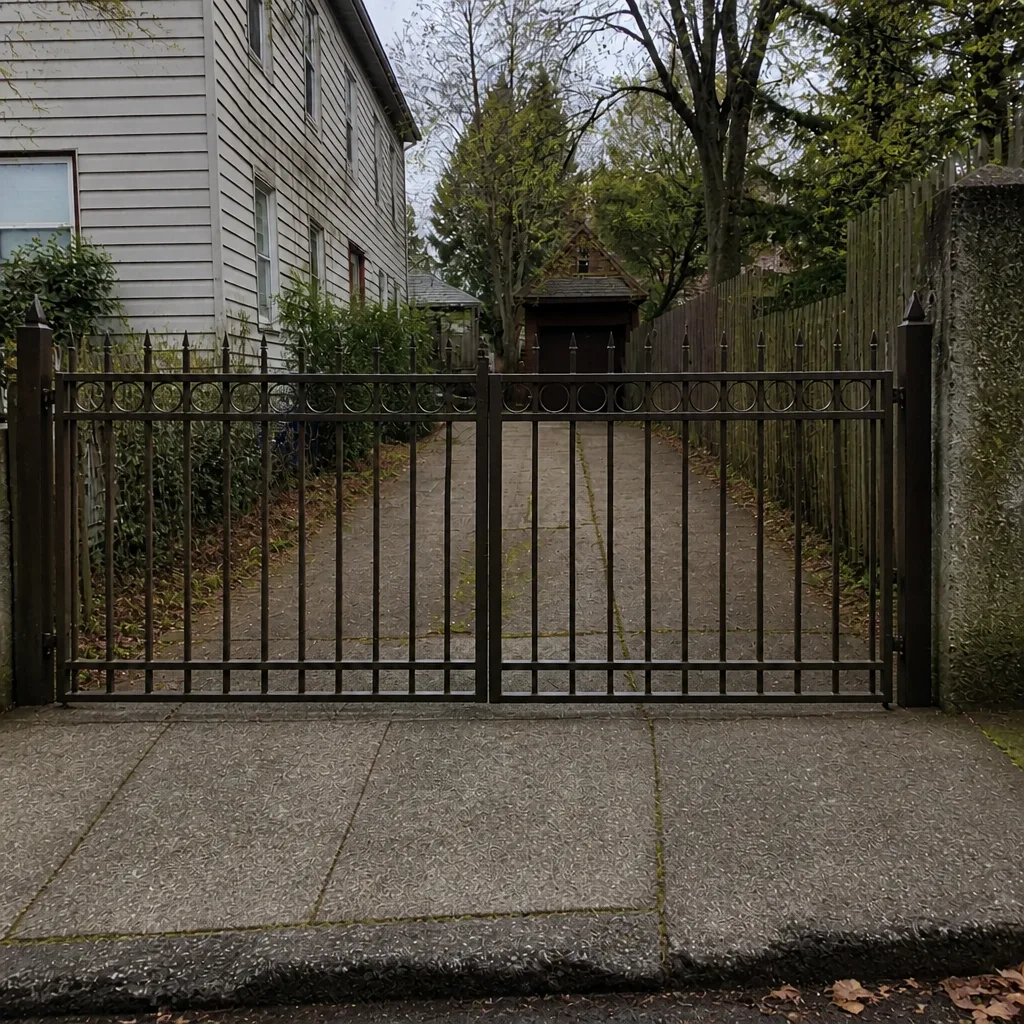 After
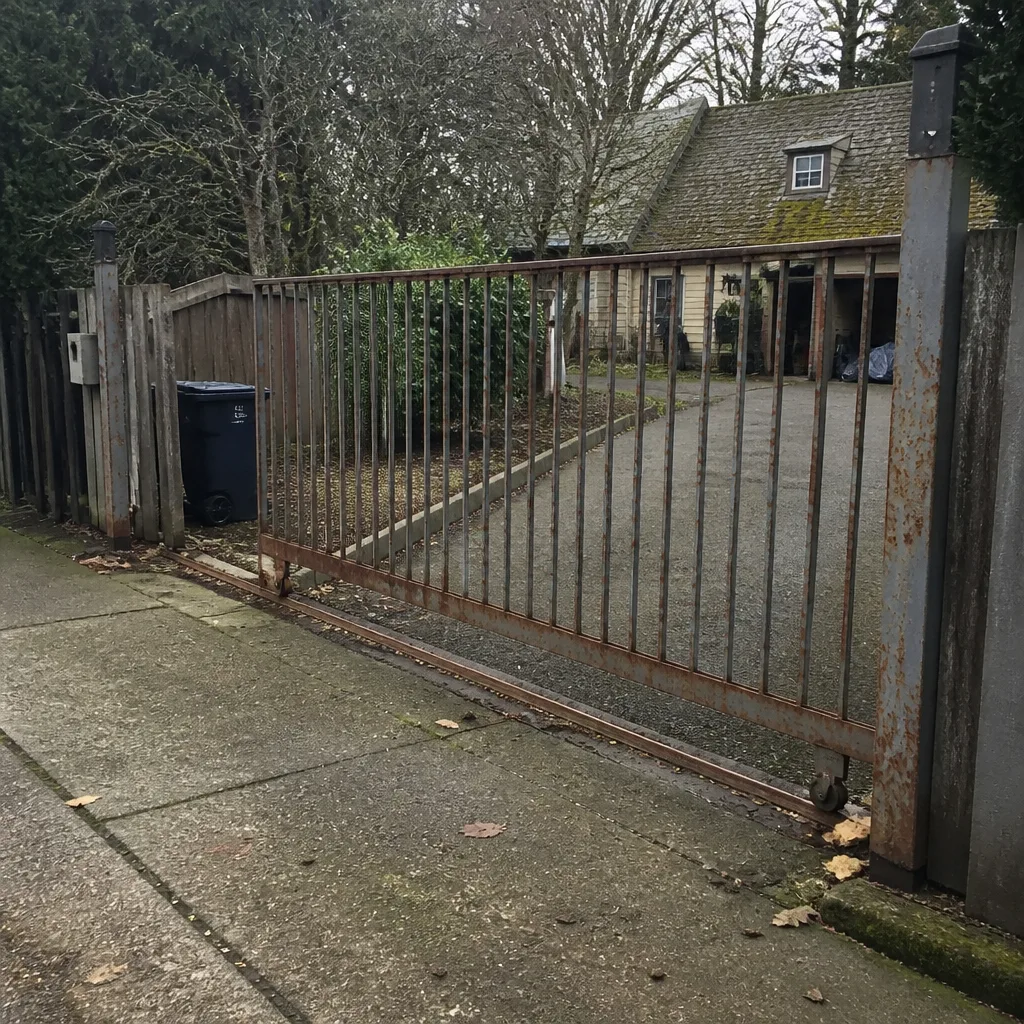 Before
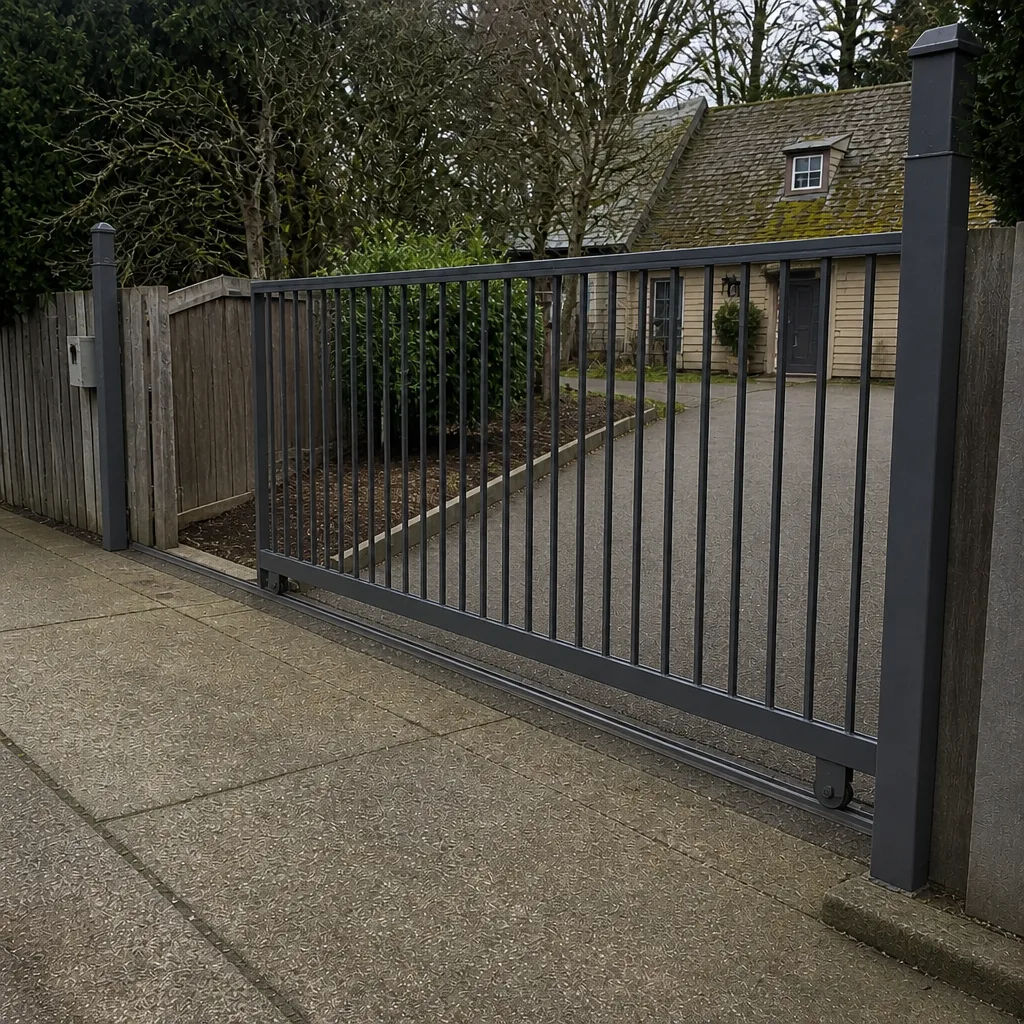 After
When to Call a Professional
Some maintenance is a homeowner’s job: wiping down tracks, a visual check for debris, noting a new noise. Others are not. Call a professional when the gate is motorized and won’t respond to commands, when a slide gate has come off its track, when a swing gate is dragging or failing to latch after a torque pass, when the operator’s wiring or safety sensors need attention, or when you smell burning from the control box. Electric gate repair involves live power and heavy moving panels, and getting it wrong is a safety issue, not just an inconvenience. Gate Repair Pearl District offers free estimates in Pearl District – call (833) 482-6184. Our technicians have up to 9 years of experience and work on your brand, from the motor to the access panel.
Frequently Asked Questions
Every month for a quick safety and visual check, twice a year for a full battery, torque, and lubrication pass, and again before and after winter. A motorized gate carries more components than a manual one, so the electrical side needs consistent attention through the wet and dry seasons.
A dry PTFE or lithium-based product on hinges, a chain-specific lubricant on chains, and a light silicone or graphite on sliding tracks. Avoid household oil, WD-40 as a lasting lubricant, and thick grease that traps moisture and grit.
No. Gate work is scheduled, not same-day. We measure, diagnose, and quote first, and you’ll get a written price before any work starts. Call (833) 482-6184 for a free estimate and to book a visit.
We work on LiftMaster, FAAC, BFT, Linear, Viking, Ghost Controls, DoorKing, Elite, and Mighty Mule. That covers the operators we most often see in the Pearl District. If you’re unsure what you have, note the model from the housing and we’ll confirm.
Loosened hardware, usually at the hinges, operator bracket, or post anchors. Thermal expansion and contraction work fasteners loose over the season, and the result is dragging, misalignment, or a gate that won’t latch. A pre-winter torque pass prevents most of it.
Yes for cleaning, visual checks, and basic lubrication on a manual gate. No for anything involving the operator’s power, wiring, battery charging system, or safety sensors. High-voltage components and heavy moving panels can cause serious injury, so leave those to a trained professional.
The Bottom Line
A gate maintenance schedule works when it’s tied to the season and the gate type, not to a generic checklist. In the Pearl District, that means a torque pass before and after winter, wet-climate lubricants applied on a wet-season rhythm, twice-a-year battery and charger checks under load, and a running log that lets a technician diagnose faster. When a gate needs more than maintenance, gate installation and honest repair are both on the table – diagnosed and fixed, not replaced unless necessary. Get the schedule right and February and August stop being surprises.
For a free estimate or to set up a maintenance visit, call (833) 482-6184. Gate Repair Pearl District works on the operator, the hardware, and the access control, so there’s one point of contact from diagnosis through the completed job.
Written by the team at Gate Repair Pearl District.