Last updated November 25, 2026
 Wrought iron
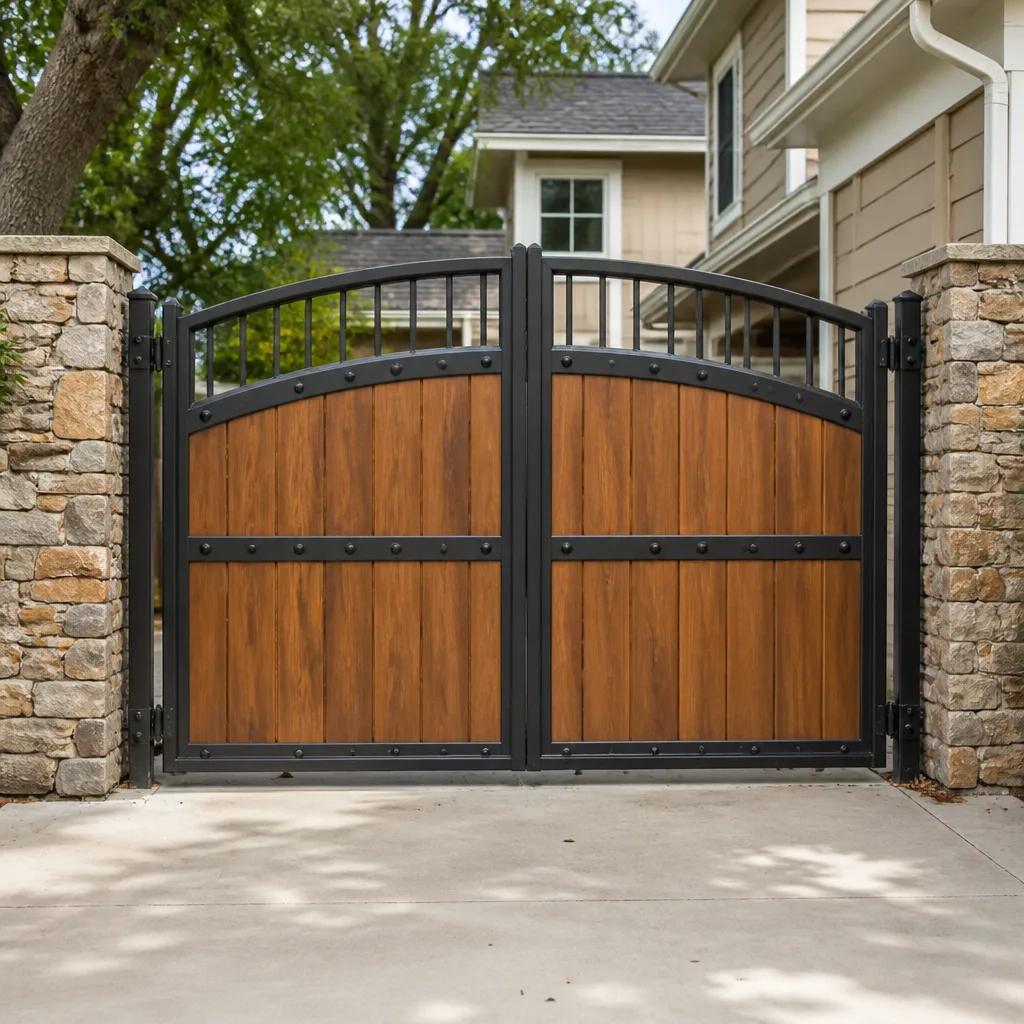 Wood & steel frame
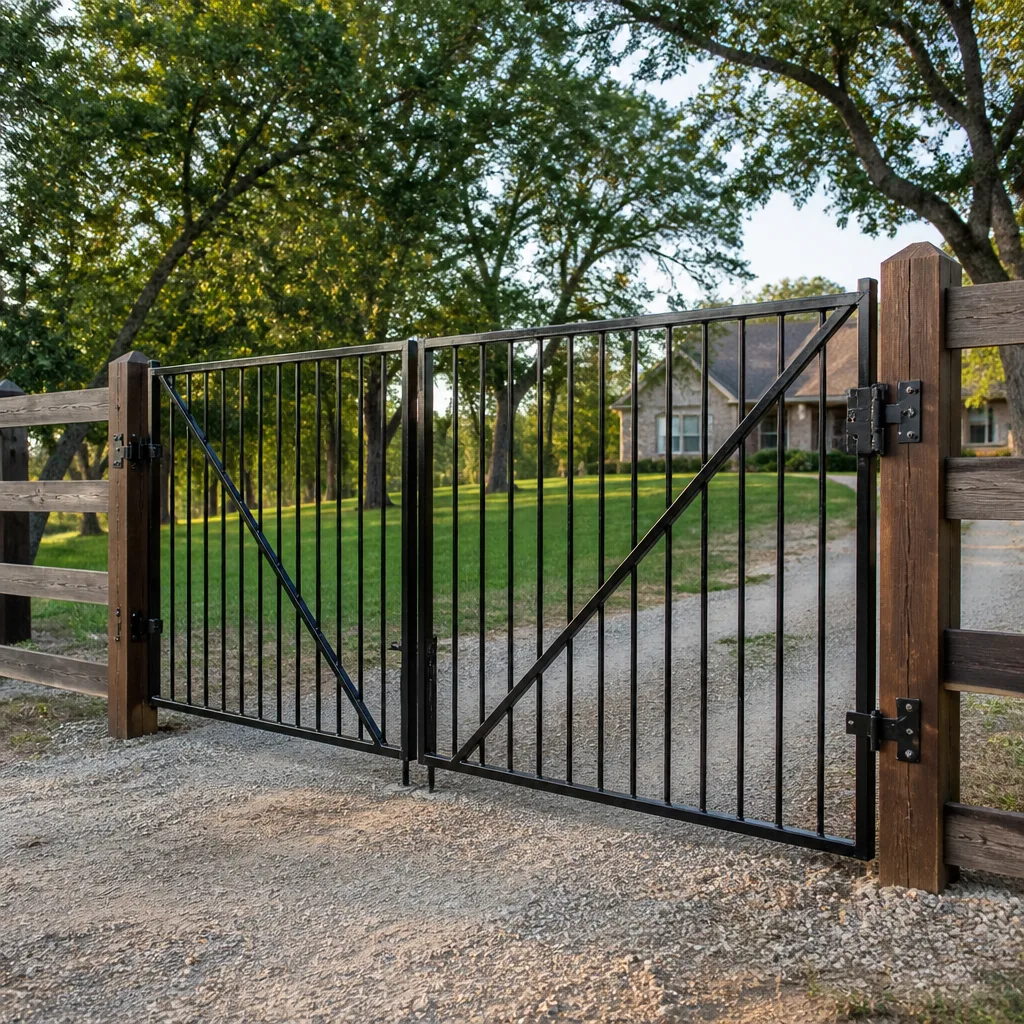 Farm & ranch
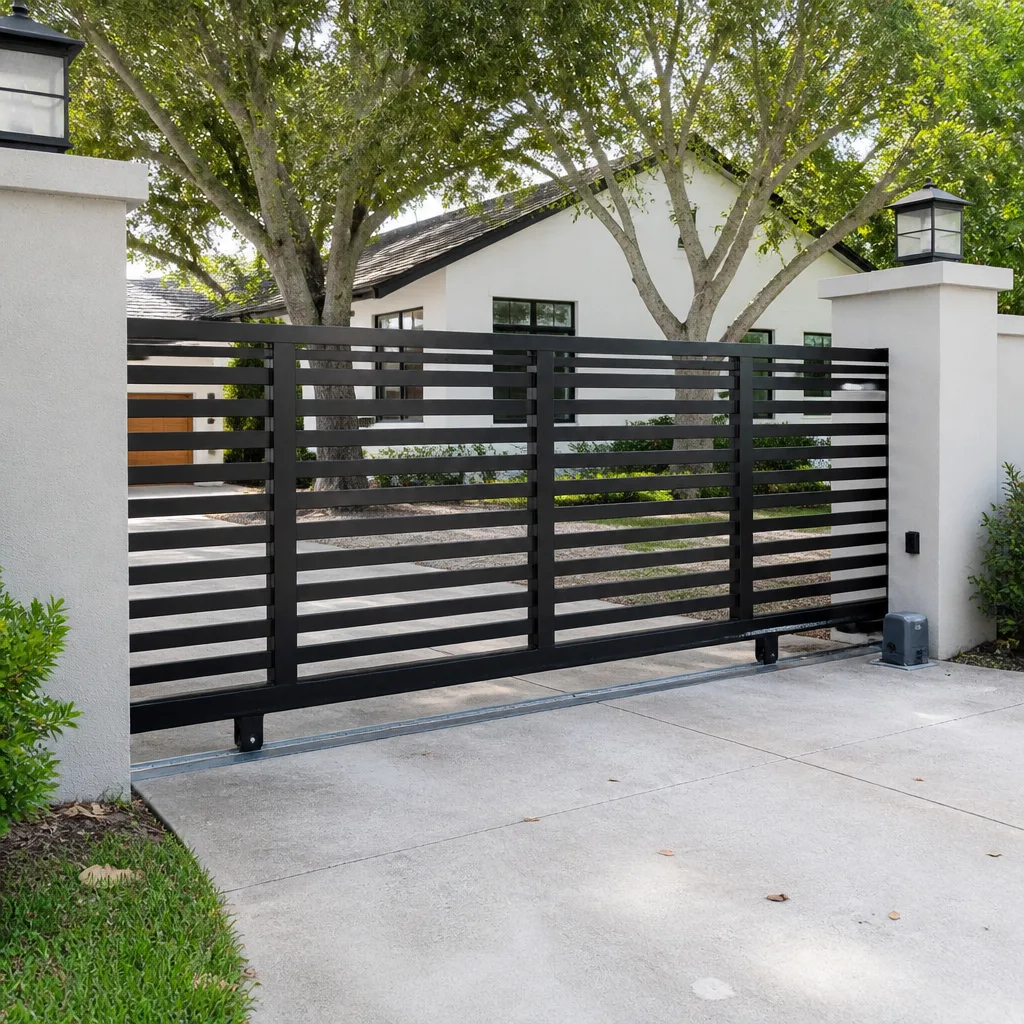 Sliding driveway gates
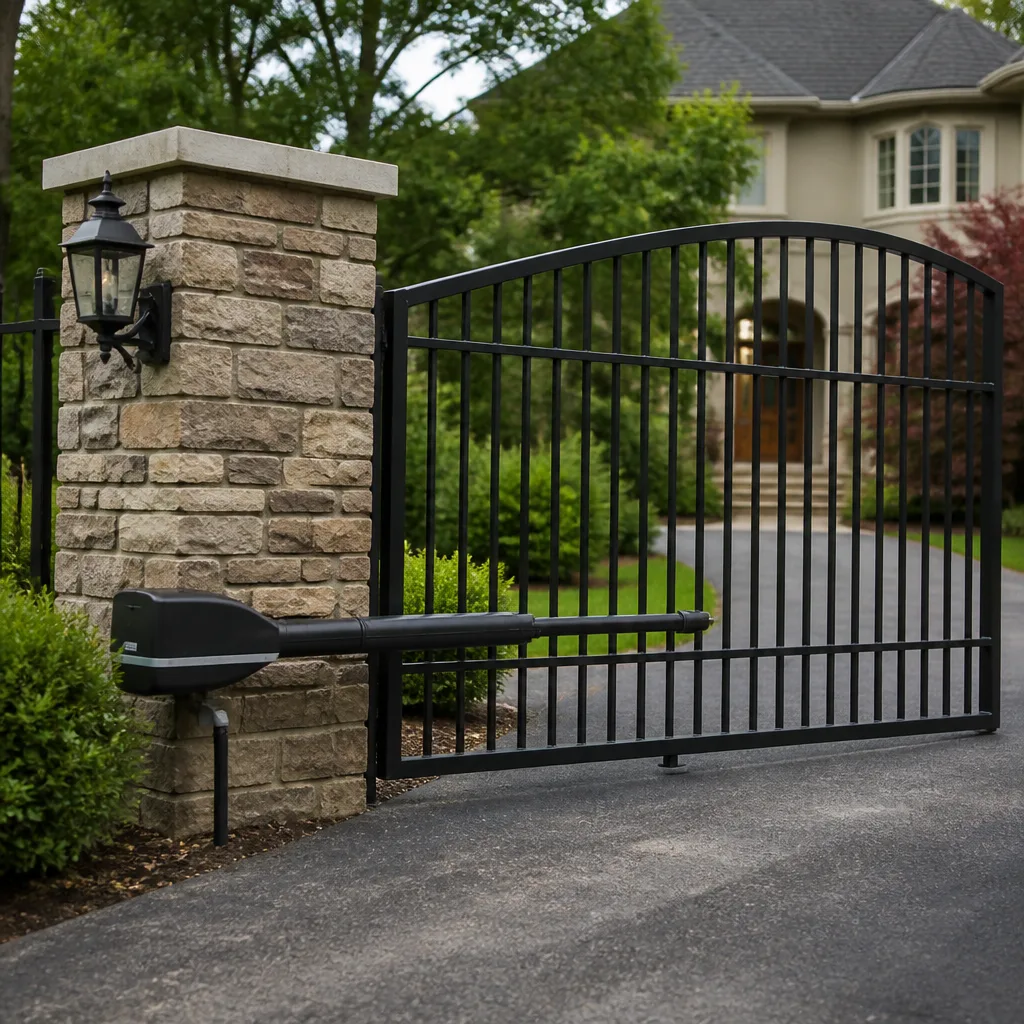 LiftMaster operators
Free on-site gate assessment - hinges, posts, and your LiftMaster or Nice gate operator checked before anything is quoted
The assessment is free and the quote is the invoice.
Get your free estimateDIY vs Professional Gate Repair: The Pearl District Homeowner’s Decision Guide
Most gate problems don’t sort themselves neatly into “call someone” or “handle it yourself.” A 400-pound automatic slide gate under stored tension is not a project that rewards YouTube confidence – the energy locked in a tensioned gate system can cause serious injury in much the same way a garage door spring can, and most homeowners have no idea they should treat it that way. But that doesn’t mean every squeak and beep deserves a service visit either. This Pearl District guide breaks gate repair into tasks that are genuinely safe to do yourself and tasks that carry real injury, liability, or warranty risk no matter how handy you are.
Quick Answer
In Pearl District, safe DIY gate repair is limited to maintenance-level tasks: cleaning sensors, adjusting loop detector sensitivity, tightening accessible hinge bolts, and lubricating pivot points. Anything involving springs, operator mounting, electrical connections at the power supply, or limit switches on a counterbalanced gate should go to a professional. The split isn’t about your skill – it’s about stored mechanical energy, electrical code, and equipment warranties.
Styles & brands we work with
- Wrought iron
- Wood & steel frame
- Farm & ranch
- Sliding driveway gates
- LiftMaster operators
Table of Contents
- Which gate repairs are safe to do yourself?
- Which gate repairs require a professional?
- Why tensioned gates are more dangerous than they look
- How DIY repairs affect your operator warranty
- Where mechanical work becomes electrical work in Pearl District
- The honest cost comparison: DIY attempt vs professional repair
- Brand-specific considerations: LiftMaster, FAAC, Elite, Mighty Mule
- Common mistakes to avoid
Which gate repairs are safe to do yourself?
Some gate maintenance is genuinely homeowner-friendly. These tasks involve no stored energy, no line voltage, and no adjustment that could cause a heavy panel to move unexpectedly. If your gate is acting up in Pearl District, start here before you pick up the phone.
- Cleaning safety sensors. Dust from a dry Portland summer and pollen in spring both cloud the photo-eye lenses. A soft cloth and a quick wipe often clears a phantom “gate won’t close” fault.
- Adjusting loop detector sensitivity. If your gate opens on its own when a car passes on the street, the in-ground loop sensitivity is likely set too high. Many control panels have a simple potentiometer or menu setting for this, and the manual explains it.
- Tightening minor hinge bolts. A rattling swing gate often just has loose bolts on the hinge plates. Hand-tightening with a socket wrench restores smooth movement.
- Lubricating accessible pivot points. A few drops of a proper lubricant on exposed hinge pivots quiets a groaning gate and slows wear. Never lubricate a track or a chain on a slide operator – that attracts grit.
- Clearing debris from the track and travel path. For slide gates, leaves and grit in the track cause drag that the motor reads as an obstruction.
These are the jobs where a competent Pearl District homeowner can save a service call without risk. None of them require you to touch a spring, an operator mount, or a wire.
Which gate repairs require a professional?
These are the tasks where the risk isn’t worth it, regardless of how skilled you are. We’ve seen gate repair go sideways in Pearl District because someone with good intentions reached for the wrong part of the system.
- Spring replacement. A tensioned extension or torsion spring on a gate holds enormous stored energy. Releasing it incorrectly can break bones or worse. This is professional-only, full stop.
- Operator mounting on new brackets. When a motor is replaced or relocated, the bracket geometry and alignment determine whether the operator works smoothly or eats itself over a season.
- Any electrical work at the operator’s power supply. Line voltage, conduit runs, and disconnect boxes are licensed-electrician territory in Portland.
- Limit switch replacement on counterbalanced gates. Setting limits on a counterbalanced gate requires understanding how the counterweight and operator coordinate.
- Safety sensor alignment after a bend or knock. Misaligned photo-eyes create an intermittent fault that’s hard to diagnose without a meter and training.
- Any adjustment on a gate with a crush-risk panel. Heavy panels that can trap a person or pet aren’t a place for trial-and-error.
If any of these describe your situation, the honest answer is that gate repair needs a specialist, not a Saturday afternoon. Electric gate repair done right means diagnosing the whole system – motor, wiring, sensors, and controls – rather than swapping parts until the fault hides.
Why tensioned gates are more dangerous than they look
The stored energy in a tensioned gate spring is the single most underrated hazard on any residential or commercial gate. A garage door spring is famous; a gate spring is not, and that makes it more dangerous because homeowners underestimate it. When you see a gate that “just needs the spring re-tensioned,” you’re looking at a component that can release a violent amount of force in a fraction of a second if the wrong bolt slips.
Beyond springs, heavy panels and slide gates that have come off their track carry crush risk. A swing gate panel on a rusty hinge can fall entirely. A slide gate that has jumped its track can bind and stall a motor, then lurch when the obstruction clears. In our experience, the homeowner injuries we hear about in Pearl District almost never come from the motor side – they come from a heavy panel, a snapped spring, or a gate that moved when someone expected it to be still.
The safe way to work near a gate is to treat it as live equipment. Before any inspection, disconnect the operator and, where the design allows, secure the gate with a prop or physical block. If you’re unsure whether a component is under load, stop. A trained technician can tell you in sixty seconds whether it’s stored energy or just weight, and that sixty seconds is worth more than any video tutorial.
How DIY repairs affect your operator warranty
Manufacturer warranties on gate operators almost always include language about “owner-performed service” or “modifications by unauthorized personnel.” The practical effect: a homeowner who opens the operator housing and adjusts something can void the coverage on the part they touched, and sometimes the whole unit. That’s a bitter outcome when the failure turns out to be a manufacturing defect you could have claimed.
The LiftMaster warranty documents, for example, are specific about authorized service and about any modification to the operator or its control board. Viking’s warranty language follows a similar pattern. FAAC and Elite units are no different in spirit. When a Pearl District homeowner calls us after a DIY attempt, the first question we ask is whether the housing has been opened – because that determines whether we’re repairing a covered issue or not.
Some brands and models are more forgiving than others. Mighty Mule, aimed at the DIY installer market, has historically been more open to homeowner service. But “more open” isn’t “no conditions.” If you want to preserve warranty coverage, the safe rule is to limit yourself to tasks in the manual under “user maintenance” and leave everything else to a technician.
For a deeper look at how operators and motors differ by brand and by gate type, our gate motor & opener page covers the diagnostics side. That’s where the actual fault usually lives when a motor “just stops working.”
Where mechanical work becomes electrical work in Pearl District
Portland’s electrical code draws a clear line: work on line-voltage wiring requires a licensed electrician and, in most cases, a permit. Gate operator power supplies and their conduit runs sit on the line-voltage side of that line. Signal wiring for sensors and keypads is usually low-voltage and covered by an installer or gate technician – but the moment the task touches the circuit feeding the operator, you’re in licensed-electrician territory.
Where does the boundary fall in practice? Here’s the practical split:
- Low-voltage and mechanical: sensor wiring, keypad and intercom wiring, remote programming, loop detector adjustment, operator mechanics.
- Licensed electrician: the dedicated circuit to the operator, conduit work, disconnect installation, any panel changes, and any rewiring of the incoming power.
- Requires a permit: new circuits, panel work, and major electrical changes. Check with the City of Portland’s permitting office before assuming otherwise.
If a Pearl District gate operator needs a new circuit because a motor upgrade pulls more current, that’s an electrician-gate technician coordination. A good gate specialist will coordinate the electrical side so you’re not chasing two contractors. That’s the kind of electric gate repair that shouldn’t be DIY: the liability of a non-permitted electrical connection to a moving motor isn’t a footnote.
The honest cost comparison: DIY attempt vs professional repair
Here’s the part that gets glossed over. A DIY repair that “almost works” often costs more than a professional repair from the start. A $150 attempt at a sensor, controller, or motor part that leads to a $600 professional repair after further damage is a common outcome in Pearl District. The failure isn’t the homeowner’s competence – it’s the fact that gate systems report symptoms far from their cause.
Some repairs are honestly low-risk DIY: the sensor clean, the loop adjustment, the hinge bolt. Others are almost always high-risk DIY:
- High DIY-failure risk: spring replacement, limit switch work, operator mounting, any control board swap without matching model numbers, and anything that involves opening the operator housing.
- Medium risk: photo-eye realignment after a knock, remote or keypad re-pairing on a system you don’t own the manual for.
- Low risk: sensor cleaning, track clearing, hinge tightening, pivot lubrication, and battery replacement in a remote.
The math is simple once you accept it: if a task is in the high-risk column, the professional repair is cheaper than the DIY attempt’s expected cost. Estimates are free, and a written estimate means you know the number before any work starts. That alone often settles the decision.
For new gate equipment rather than repair, the math changes again because installation involves anchors, footing, and alignment. Our gate installation page explains what that work actually involves when it’s done to spec.
Brand-specific considerations: LiftMaster, FAAC, Elite, Mighty Mule
Brand matters more than most Pearl District homeowners expect. The same symptom – gate opens, won’t close – can point to a sensor fault on one brand, a limit adjustment on another, and a control board failure on a third. Knowing the brand up front is why we emphasize working on your specific equipment.
LiftMaster operators are common on residential and light commercial gates, and their accessories (remotes, keypads, receivers) are usually well-documented. FAAC is common on heavier slide and swing gates and rewards proper maintenance. Elite covers a broad range of residential gate openers, and parts availability varies by model year. Mighty Mule sits in the DIY-friendly end of the market, but that label can tempt homeowners into a repair that still exceeds their comfort with line voltage.
We work on all of these, plus BFT, Linear, Viking, Ghost Controls, and DoorKing. Our technicians have up to 9 years of experience across the nine-brand set, and the practical benefit is that you don’t get pushed toward a full replacement because the technician doesn’t recognize a fix that’s specific to your model. Brand-agnostic repair capability means honest diagnosis first.
For access control at the panel – keypads, remotes, intercoms, smart entry – the brand question is just as important. Programming a LiftMaster receiver is not the same as programming an FAAC board. From the motor to the access panel, we cover the whole system so you’re not calling two specialists.
Common Mistakes to Avoid
- Assuming the sensor is broken when it’s dirty. In a Pearl District summer, dust and pollen on a photo-eye cause most “gate won’t close” calls. Wipe the lenses before diagnosing anything else.
- Touching the spring because it “looks loose.” A spring that appears loose may be fully tensioned and one slip from releasing. Never adjust a spring without training and the right tools.
- Opening the operator housing to inspect the control board. This is exactly what voids most LiftMaster and Viking warranties. If the operator is under warranty, opening the housing before diagnosis can cost you the claim.
- Running new wiring without checking permit requirements. Portland requires permits for most line-voltage work. A gate’s power run isn’t an exception.
- Replacing the whole operator when a limit switch or sensor is the real fault. Replacement is a last resort after diagnosis, not a first step. We hear this most often with Mighty Mule and Elite operators.
- Ignoring a slow or noisy gate. A gate that drags can be a loose hinge today and a bent track panel next month. Early repairs are the cheapest repairs.
- Trying to align a heavy panel alone. A swing panel that’s come off a hinge can drop with surprising force. Get a second set of hands or call a technician.
When to Call a Professional
Call a professional when the repair involves any spring, any line-voltage connection, any limit switch adjustment on a counterbalanced gate, or any operator mount that needs to change. Call when the gate is under load or has come off a track. Call when a “simple” sensor or keypad problem doesn’t clear after cleaning, or when the brand or model is unfamiliar. And call when the operator housing has been opened already – diagnosis becomes more important, not less, once parts have moved. In Pearl District, gate failure on a property line raises security concerns on top of the mechanical ones. Gate Repair Pearl District offers free estimates in Pearl District – call (833) 482-6184.
See the difference
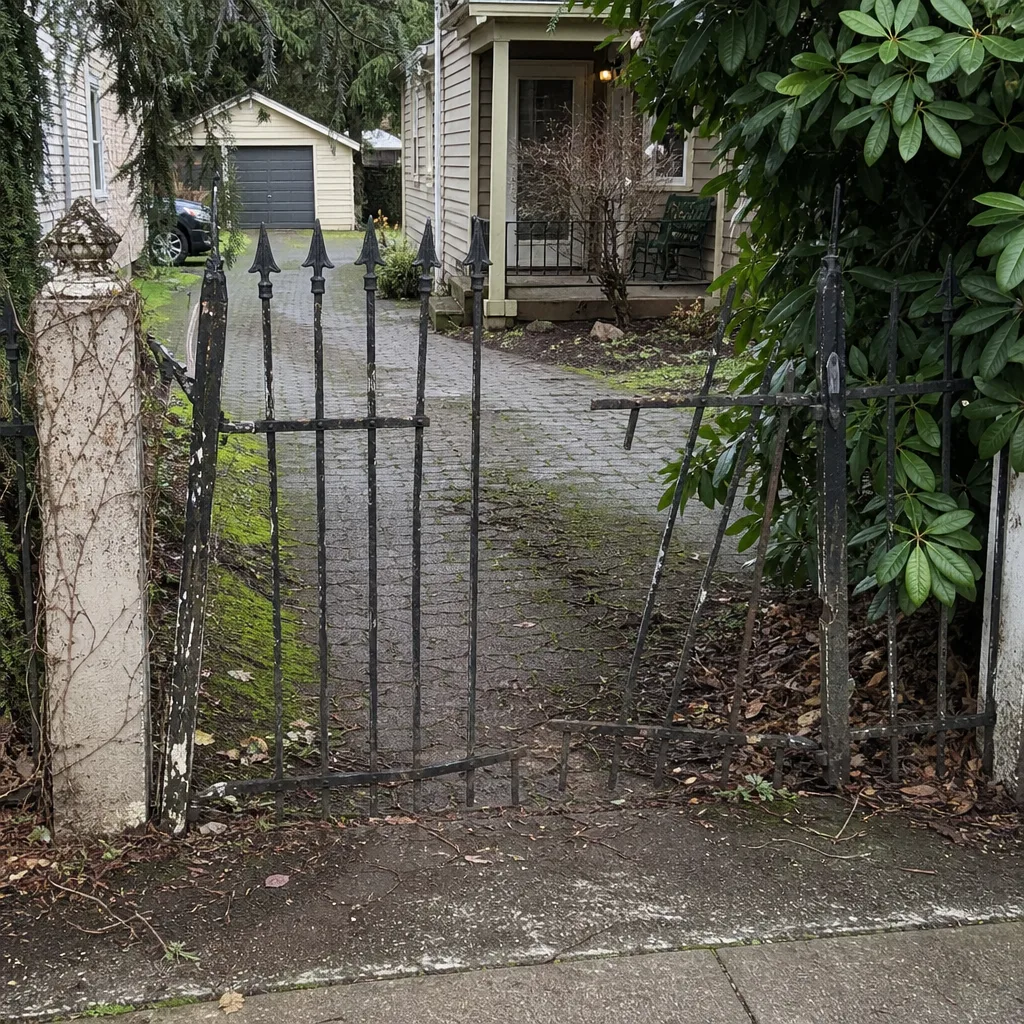 Before
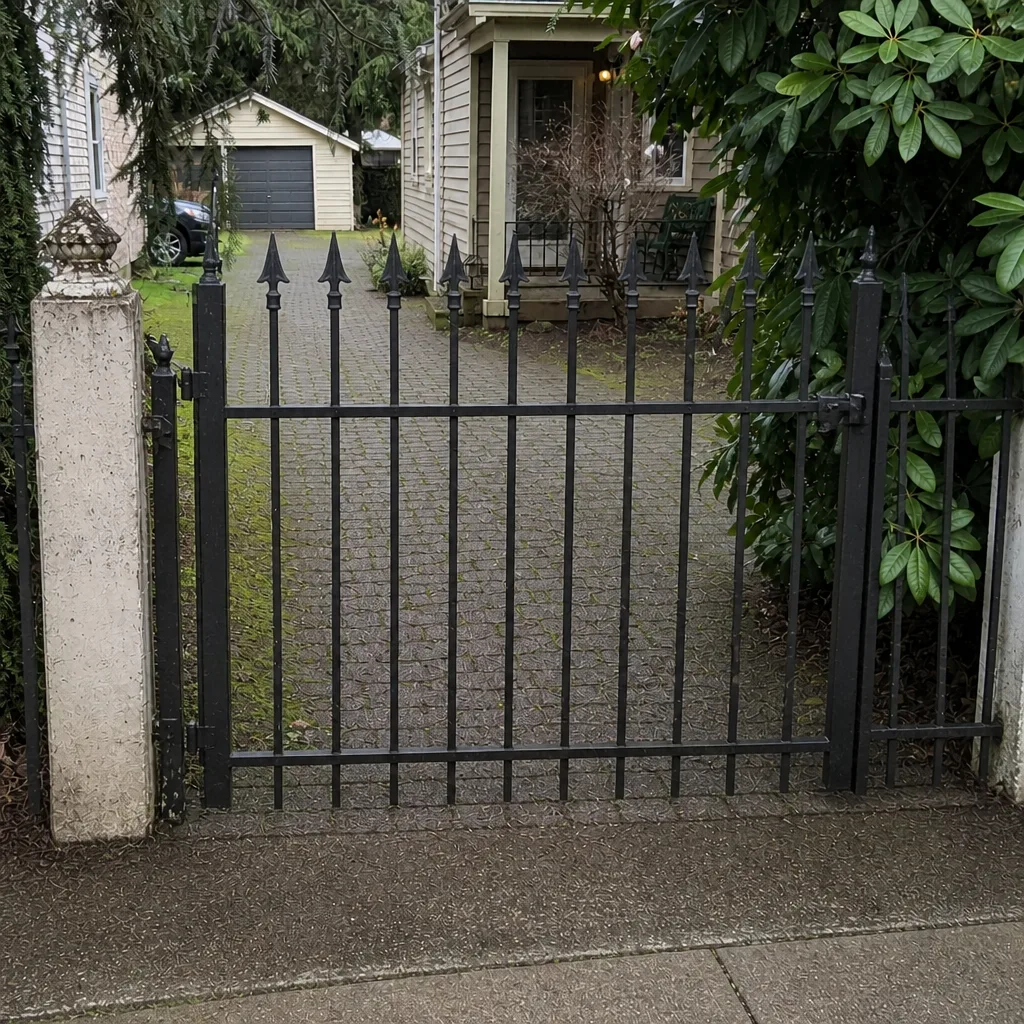 After
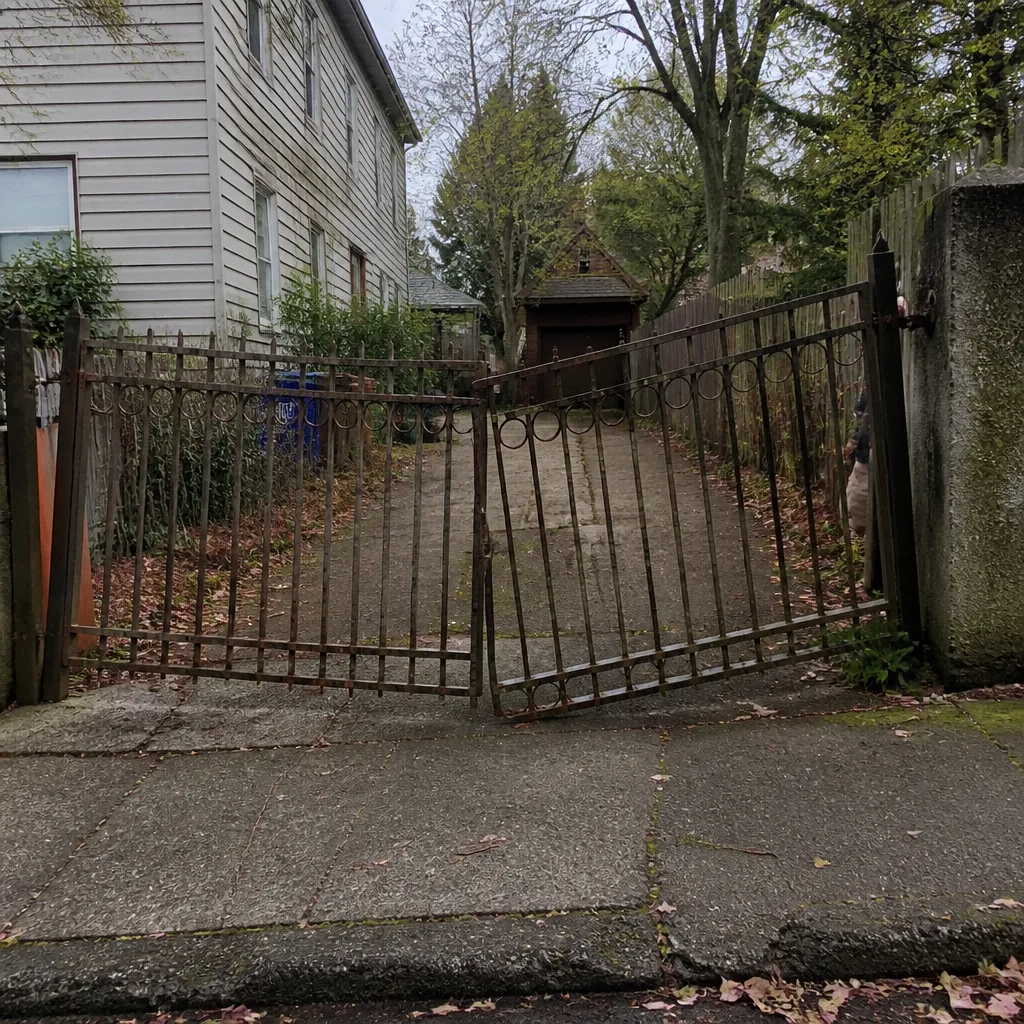 Before
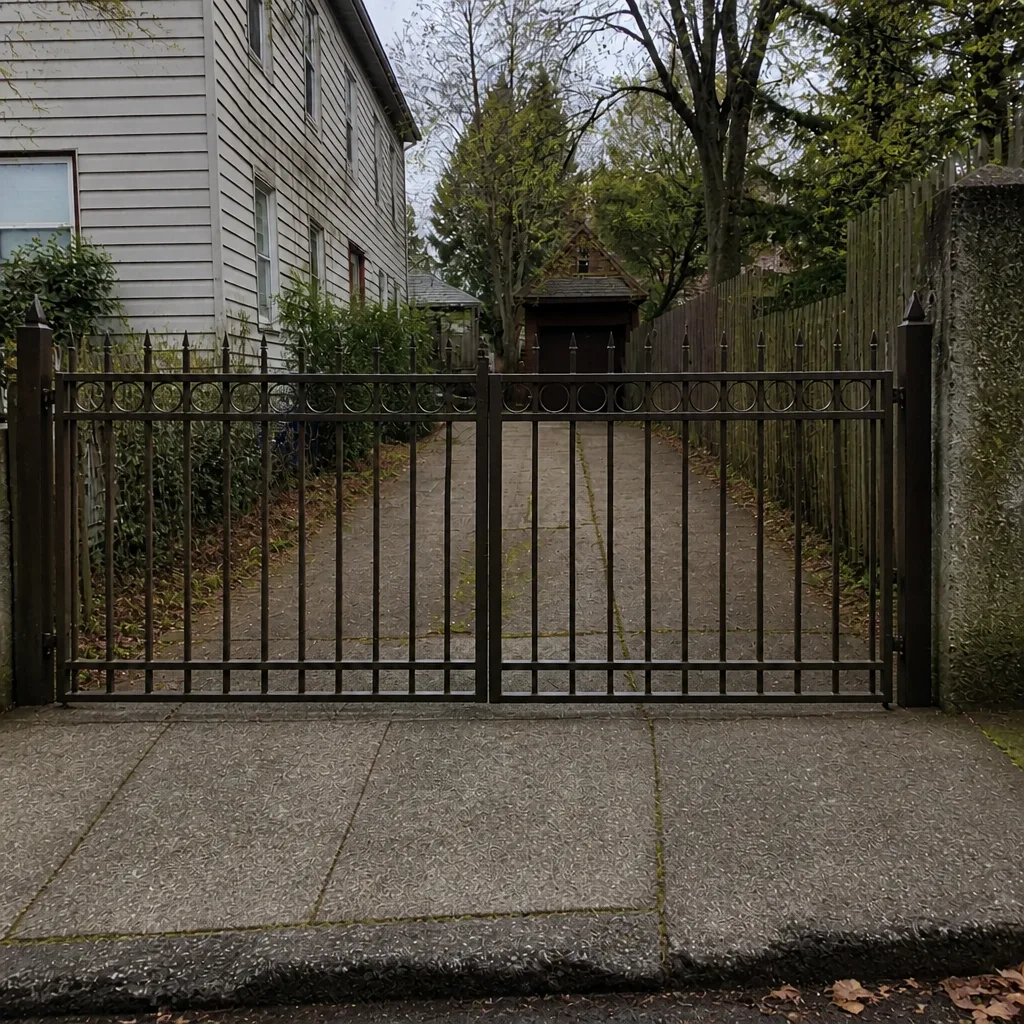 After
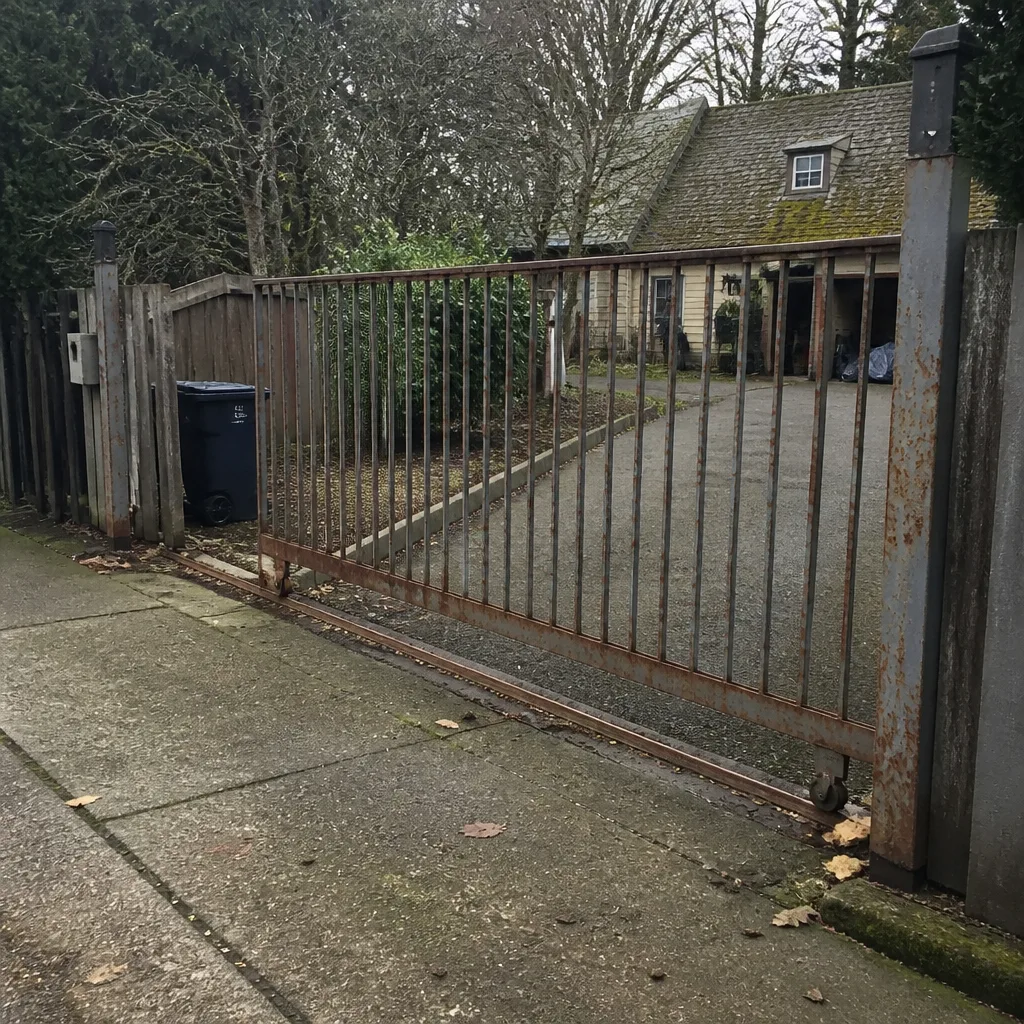 Before
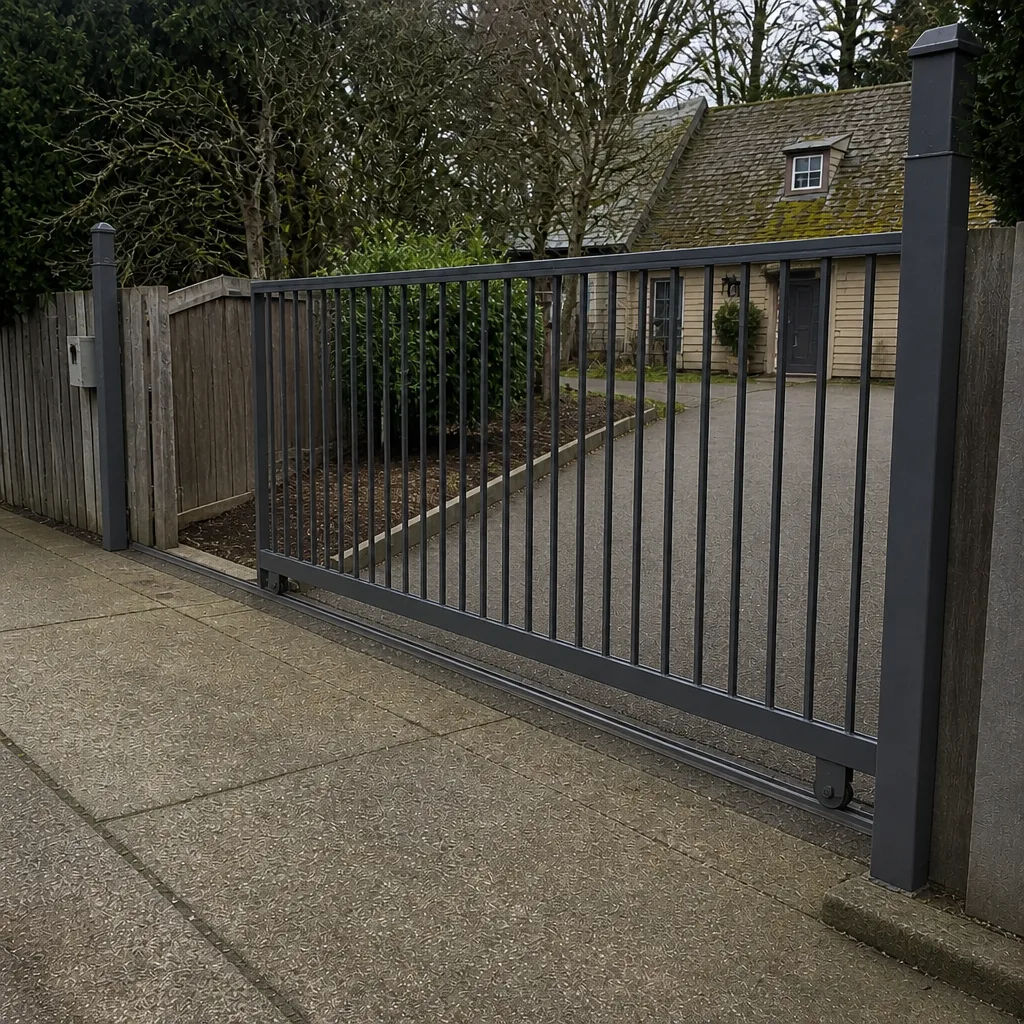 After
Scheduling Your Repair: How the Process Works
Once you decide professional repair is the right call, the process is straightforward. Here’s how a typical job moves from first call to finished work, so you know what to expect.
- 1
Describe the symptom. “Gate opens, won’t close” or “motor runs but gate doesn’t move” gives us a starting point. Brand and model, if you have them, narrow it further.
- 2
On-site diagnosis. We check the operator, the sensors, the controls, and the mechanical side together. Gate systems overlap between mechanical and electrical, so a full look avoids a repeat visit.
- 3
Written estimate. You get a written estimate before any work starts. If you’ve already done a DIY attempt, tell us what was touched – that changes the diagnosis.
- 4
Repair or replace decision. Diagnosed and fixed, not replaced unless necessary. If repair is possible, we repair.
- 5
Access control recheck. After repair, we verify remotes, keypads, and sensors still work and re-program as needed.
- 6
Single point of contact. One team from diagnosis through completed repair or installation, so you’re not coordinating multiple contractors.
If you’re looking at a new gate rather than a repair, the schedule is longer because equipment has to be measured and ordered. Understandably, that’s not a same-day job – it’s a measured, scheduled one. For a broader look at what we do across every gate type, the Gate Repair Pearl District page gives the overview.
Frequently Asked Questions
Yes, for maintenance-level tasks only. Cleaning sensors, adjusting loop detector sensitivity, tightening hinge bolts, and lubricating accessible pivot points are safe. Any task involving springs, operator mounting, line-voltage electrical work, or limit switches on a counterbalanced gate requires a professional. If you’re unsure which category a task falls into, treat it as professional-only.
Homeowners can perform certain electrical work on their own single-family home in Oregon, but the work generally requires a permit and an inspection. Gate operator line-voltage circuits are also a safety-critical component. Practically, most Pearl District homeowners are better served having a licensed electrician handle the line-voltage side and the gate specialist handle the mechanics and low-voltage controls.
Typical gate repair in Pearl District ranges from roughly $150 to $600 depending on the fault, with more if the operator needs replacement or electrical work is involved. The written estimate sets the final price, and we quote the price before any work starts. Call (833) 482-6184 for an exact quote – estimates are free.
Often, yes. LiftMaster and Viking warranty documents both restrict coverage when the operator has been serviced by someone other than an authorized technician. Opening the housing to inspect is the most common way homeowners accidentally void coverage. If the unit is under warranty, get a professional diagnosis first.
The difference is footing, anchoring, and alignment. A new gate installation involves setting posts to proper footing depth, aligning the operator with the gate’s travel, and wiring the system correctly. That’s a scheduled job with measurements and equipment ordering, not a same-day repair. Pearl District properties with complex access needs also benefit from access control programming at install time.
Usually not, and it’s worth a professional diagnosis. On many operators, a run-without-movement fault points to a failed limit switch, a stripped gear, or a slipping clutch inside the housing. Opening the housing to investigate is exactly what voids warranty coverage. The same symptom points to a limb/sensor fault on some brands, which is why brand familiarity matters.
The Bottom Line
Gate repair isn’t a single decision – it’s a set of decisions, each with a different risk profile. Sensor cleaning, loop adjustment, hinge tightening, and pivot lubrication are safe, sensible DIY tasks that save a service call. Springs, operator mounts, line-voltage wiring, and limit switches on counterbalanced gates are professional-only, and the reason isn’t your skill level – it’s stored energy, electrical code, and warranty coverage. When a DIY attempt crosses into a high-risk task, the repair costs more than it would have. Call (833) 482-6184 for a free estimate and a written price you agree to before any work starts.
What can I do today?
Start with the low-risk tasks. Wipe the sensors, clear the track, and check the hinge bolts. If the gate still stalls, opens on its own, or won’t move, that’s the point to bring in a specialist. We work on LiftMaster, FAAC, Elite, Mighty Mule, and five other brands, and the first visit is a diagnosis and a written estimate. Electric gate repair done right starts with knowing exactly what’s wrong.
Written by the team at Gate Repair Pearl District.